
|
|
|
|
|
#1
 08-30-2013, 08:42 AM
|
||||
|
||||
|
CBS prototype camera?
http://cgi.ebay.com/ws/eBayISAPI.dll...ht_2599wt_1223
Ebay item #370887768870 - Press photo, undated "Miss Color Television" 22 YO Jean Rogers of Yonkers transmitted to audience of newspaper men and members of IRE. Shown seated before the TV camera in CBS studio at 49 E 52nd St. Has anyone seen this camera before? Looks like a prototype. And why is the operator ("Edward Anholt") holding a pushbutton switch? 
|
|
#2
08-30-2013, 01:17 PM
|
||||
|
||||
|
This camera is new to me. Perhaps the operator is snapping a still photo and the button is a shutter release??
-Steve D.
__________________
Please visit my CT-100, CTC-5, vintage color tv site: http://www.wtv-zone.com/Stevetek/
|
|
#3
08-30-2013, 01:41 PM
|
||||
|
||||
|
Hmmm
 Since the model is not Patti Painter and the camera looks like a hand-made prototype, I'd say it's a pre-1949 version. That is, one that came before the sequential color camera CBS used in their famous 1949 demo that had 19-year-old Patti as the model. Since the model is not Patti Painter and the camera looks like a hand-made prototype, I'd say it's a pre-1949 version. That is, one that came before the sequential color camera CBS used in their famous 1949 demo that had 19-year-old Patti as the model. Pete
|
|
#4
09-01-2013, 04:33 PM
|
||||
|
||||
|
Quote:
Goldmark, in his 1973 book, indicates that he used Patty Painter in the famous 1946 UHF tests where the signal was transmitted on UHF between the Chrysler Building in downtown NYC to the Tappan Zee Inn in Nyack, NY. I feel that this camera is 1945 or earlier. This looks like an improvement on the WWII era drum based camera, but more crude than the 1945 one shown in the below picture from ETF. http://earlytelevision.org/images/cbs_camera_10001.jpg In the eBay picture, you can see a motor on the back that turns a color drum, similar to the motor and color drum in this picture also from ETF, with a silver surface mirror in the center to reflect the picture into a modified standard B&W camera such as the below1945 image: http://earlytelevision.org/images/CBS_3.jpg The hastily built aluminum lift-up cover on the right side of the camera is probably to hide the fact that Goldmark is using a normal B&W RCA camera with the lens removed. I would place this camera prior to the 1945 twin lens drum camera shown above simply because it does not have a viewfinder and you get the idea that the cameraman is watching a monitor to adjust his lens. The 1945 cameras had the left lens reflecting the image off a mirror inside the color drum and into a camera. The right lens went through a dove prism prism (or three mirrors) that inverted the projected image on a ground glass for the cameraman to see and use to focus as both lens were on the same rack mount. Goldmark caught some flack in an early color test when someone caught the fact that the color was wired and not broadcast and this may have been the camera used for that earlier test. I cannot remember the date or where I read about it, but it was prior to the 1946 UHF tests. James
|
|
#6
09-17-2013, 03:41 PM
|
|||
|
|||
|
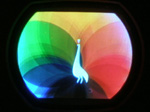
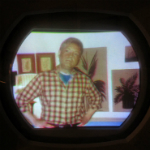
Interesting 1946 CBS Fiel Sequential TV surviving
I was watching this BBC documentary about JLB and was very surprised to see this famous CBS TV:
http://www.youtube.com/watch?v=UuE--w03vTc (at 52'53'). We will try to get more informations from the BBC and enventually from the director of the film.
|
|
#7
09-19-2013, 08:07 AM
|
||||
|
||||
|
"This set was produced by CBS in 1946"
 But it wasn't. It was made by General Electric for a standard that differed from the one proposed by CBS. Read more here.
__________________
tvontheporch.com
|
|
#8
09-20-2013, 12:14 PM
|
|||
|
|||
|
Thanks
Ok, interesting! Have you some more informations about this set and this other field sequencial system? So the guy on the BBC film is not right?
|
|
#9
10-23-2013, 11:08 PM
|
||||
|
||||
|
Quote:
this means the video produced an interlaced 525 line, 144 field image on the set. In today's parlance 525@72i.
|
|
#10
10-24-2013, 09:14 AM
|
||||
|
||||
|
Quote:
|
| Audiokarma |
|
#11
09-20-2013, 05:28 PM
|
||||
|
||||
|
Lots of information on various early color systems, including field sequential, on our website:
http://www.earlytelevision.org/color.html Unfortunately, the BBC is incorrect. That receiver is in the National Museum of Scotland. It was purchased by Michael Bennett-Levy from a dealer in the the US some years ago, and donated recently to the museum.
|
|
#12
09-23-2013, 04:40 PM
|
|||
|
|||
|
...more about CBS here
http://www.ebay.com/itm/TV-NEWS-BOOK...item565b9b4381
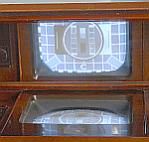
Thank you Steeve. Some more informations about the CBS system in 1950 in this TV NEWS BOOK with an interesting picture of an expetimental receiver (big set and smal screen).
|
|
#13
09-29-2013, 05:53 AM
|
||||
|
||||
|
Quote:
Peter  
__________________
http://www.nostalgiatech.co.uk/Vintagetech.htm https://www.youtube.com/c/PeterScott/videos Last edited by peter scott; 09-29-2013 at 05:59 AM.
|
 |
|
|










 Hybrid Mode
