
|
|
|
|
|
#1
 04-03-2016, 11:24 AM
|
||||
|
||||
|
RCA Hawkeye Camera Confusion
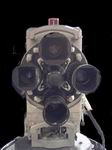
Spurred on by some very nice photos sent to me by Tom, I set about entering the RCA Hawkeye camera details into my Museum website
There are two models of the Hawkeye camera, HC-1 & HC-2, I have photocopies of brochures for them both (downloadable from museum) and the HC-1 is extensively covered in the RCA Broadcast news see : http://americanradiohistory.com/RCA_...ange_Guide.htm issues 170 & 172 The camera body case style is quite different for the two models see http://www.tvcameramuseum.org/rca/rcathumb.htm#hc1 So Far so good! However the pictures sent to me by Tom clearly show the later body style with a manufactures label stating "HC-1". there is a second camera known about, also with a HC-1 label. These two cameras have serial numbers of 1154 & 1150. Can anybody explain what this is about? were RCA using up old labels?? or what. Has anybody got one of the first version of the Hawkeye HC-1 or a late HC-2 labeled HC-2? attachments show the two body styles. I would appreciate any help here as I know it is very important that the details of these cameras should be correct. 
|
|
#2
04-03-2016, 08:07 PM
|
||||
|
||||
|
I have no clue, but it would be interesting to see a label for the earlier HC-1. Wondering if the MI numbers are the same or not.
|
|
#3
04-11-2016, 04:16 PM
|
|||
|
|||
|
Quote:
Could it be that after the HC-2 they withdrew their Hawkeye recording system altogether? Judging from the body case styles I would call the CCD-1 a successor of the HC-2, but there is no mention of a dockable recorder anymore. Btw, I find it nice how they bragged about the CCD-1 being content with 30 lux. I think the BVP-3 was, too. And it would be interesting to see real footage of the CCD-1, in particular in comparison to the BVP-5 (which still had shortcomings, in particular the ugly red smear). I think it was somewhere else where I read the account of a cameraman who discussed the CCD-1 with a RCA representative and told him "my Ikegami 79 is shooting circles around it".
|
|
#4
04-13-2016, 06:07 AM
|
||||
|
||||
|
I would agree that the CCD-1 is later than the HC-2, but I do not have fine details of the RCA time line for these. It would seem to me that the team developing the CCD sensors just took the HC-2 body and replaced the tubes with the appropriate circuit changes.
It would have been a much cheaper option to launch what was a 1st generation prototype camera. RCA had a long development program over many years and this would be the toe in the broadcast market. It can't be far away from the point were RCA gave up making cameras, perhaps someone can enlighten us with more details. Brian
|
|
#5
04-26-2016, 12:20 PM
|
|||
|
|||
|
Hello Brian-
After speaking with two former RCA employees, the HC-2 had a more robust enclosure similar to the CCD-1, replacing the thin sheet metal cover. It was painted similar to the CCD-1 colour scheme. The VF may have been different, and the switch cluster was rearranged in the -2 model. RCA had hoped that Philips would produce a 1/2" format PBO tube, but they never delivered, so the cameras used Saticons. Both used the Chromatrak component recording format, which did indeed look better than Umatic. The following year at NAB 1984, Sony introduced Betacam, and the rest is history. The plan was that RCA and Matsushita would join in a competitive alliance against Sony, but RCA's available capital money was going into Video disc. The RCA Board in NY starved the division, and it announced its closing in Oct.1985. Any "New" projects came out of sustaining funds. Enjoy your camera museum site immensely! Regards JB
|
| Audiokarma |
|
#6
06-21-2024, 03:01 PM
|
|||
|
|||
|
Quote:
RCA and Panasonic presented a recording camera system for ENG at 1981 NAB convention. Each company developed their own camera head but used the same recorder made by Panasonic. The recorder used standard VHS cassettes with the mechanism adapted from VHS tape recorder. Panasonic called its complete system “M-format”, alluding to the tape lacing method used on VHS machines; the Panasonic camcorder was named “Recam”. RCA named the camcorder "Hawkeye" and the new recording format “ChromaTrak”. The format improved chrominance resolution, distortion, and noise by a factor better than 3x compared to 3/4 -inch cassette systems. Two audio tracks and a dedicated time code track were included. The Sony unit, which did not have official name at that time, but later was branded “Betacam”, was also presented at NAB '81 still in development stage and was designed to use Betamax videocassettes. In October 1982, WKBD-TV 50, Detroit, purchased the RCA Hawkeye video recorder/camera system, becoming the first station in the world fully equipped in the new 1/2 -inch broadcast format. You can read more on the history of RCA/Panasonic vs. Sony rivalry to develop half-inch component video format, or you can watch a video.
|
|
#7
06-22-2024, 01:14 AM
|
||||
|
||||
|
Hi to all,
Hi DVtyro, Ampex (where i worked), also signed up with the Panasonic Recam system. I manned a small booth at the Cannes Film Festival to demo the advantages of component video recording for lightweight movie filming. We had a 2 VCR setup, recorder/player + player only + editing desk and a camcorder to roam & shoot throughout the expo. Amusing : weather was very hot and dry and the booth's carpet generated a lot of static electricity so desk unit transport controls often went berserk when the keyboard was touched, requiring machine shutdown & CPU reboot. I got seriously concerned about the risk of permanent machine failure. Solved the problem on the 2nd day by "watering" the carpet with a gardening can which killed the static buildup. Machines worked OK after this fix. This amused people, word got around & people took photos of "the crazy sales engineer who waters his booth every morning" as i had to cross the entire expo hall with my can to fetch the water. Fun times... We never sold any Recams , at least in the EU. Then in 1986 Ampex partnered with Sony on the Betacam bandwagon and what a hit that was... Best Regards jhalphen Paris/France
|
|
#8
08-08-2023, 08:29 PM
|
|||
|
|||
|
Rca hc1
I actually own the RCA HC1 camera that is in the photo. I bought it from the gentleman that you mention some years ago. The real holy grail is the RCA CCD1. I would love to have that game changer alongside my HC1, TK76,86, and 710.
|
|
#9
08-27-2023, 04:13 PM
|
||||
|
||||
|
RCA Cy Cy Dy One
The body on this Camera is different, I have the real holy grail , very first Prototype RCA Cy Cy Dy One , and two Tk761,s (PAL) that were the last Studio Cameras that were made .
(2 X CCU,s & Remotes ) no Cables yet . Last edited by XDCAM; 08-27-2023 at 04:29 PM.
|
|
#10
06-22-2024, 11:04 AM
|
||||
|
||||
|
For future reference: spraying the carpet with a weak solution of fabric softener provides a longer lasting static reduction that doesn't require daily watering. <grin>
|
| Audiokarma |
|
#11
06-23-2024, 02:06 PM
|
||||
|
||||
|
Jerome, your post about watering the carpet made me laugh out loud.

|
|
#12
06-24-2024, 05:46 AM
|
||||
|
||||
|
Hi to all,
@old_tv_nut : Wayne, Thanks! for the tip, i'll remember it. 40 years + later, i'm out of the trade show circuit forever. @ppppenguin, Hi Jeffrey, good! to hear from you. Keenly following the incredible work being accomplished at the BECG Museum by yourself & other team members. Best Regards jhalphen Paris/France
|
|
#13
06-28-2024, 02:54 AM
|
|||
|
|||
|
@jhalphen, thanks for the info! I mention in the article that Betacam and later Betacam SP became the ENG formats advised by EBU, although some broadcasters like Thames TV used MII. I also mention Ampex switch to Betacam.
When you say that you demoed the advantages of component video recording for lightweight movie filming, was it regular interlaced, or was the equipment modified for prog-scan? Was it before the advent of MII? So your equipment used full-size VHS cassettes? Thanks!
|
|
#14
06-28-2024, 12:44 PM
|
||||
|
||||
|
Component operation removes the all too obvious problems and compromises of PAL, NTSC and SECAM. It brought its own problems. All routers, vision mixers etc had to have three separate channels. Three times as much patching, distribution amplifiers etc. All accurately matched for gain and timing.
This was only resolved when serial digital interfaces became standard. The original digital component interconnect with multiple twisted pairs on a 25 pin connector was only useful in limited areas. The first attempt at a serial digital interface never really happened. Sony designed the method that became standard, produced chips to do the job and the rest is history.
|
 |
|
|








 Hybrid Mode
