
|
|
|
|
|
#1
 01-23-2024, 12:48 PM
|
||||
|
||||
|
Who was the market for the JVC CR-6x00U?
Someone's waving a CR-6300U at me for not too much money but I'm a little confused on who on earth JVC was selling this to.
I already own a Sony VO-2600 but that is clearly a studio machine since it's your standard functionality Umatic top-loader with record functionality and not a lot else. This JVC unit however has a UHF/VHF tuner and a clock, presumably for at least a single-event timed recording mode. Two things in a studio environment you would of never need. In 1976 JVC had also just started marketing VHS the same year with the same features. (okay it has a digital clock rather than analog) The CR-6300 new seems to of been around $1900, while the HR-3300 VHS deck was supposedly around $1200 (I can't find a reliable source on the price). Was shipping a consumer-grade Umatic deck a stopgap for VHS or were they aiming at upper-class households and educational institutions such as schools where the content being recorded wasn't always going to be a composite camera feed? 
|
|
#2
01-23-2024, 01:30 PM
|
||||
|
||||
|
Hi to all,
Hi MIPS, When Sony invented the U-Matic format at the extreme end of the 60s, it was hoping to make it a consumer format (see YT Sony History movie). JVC & Panasonic also adopted the standard. Didn't happen; too expensive, too bulky and tapes limited to 60 min, too short for a movie. Some use for X-rated content. Then portable machines appeared and Electronic News Gathering (ENG) was born, replacing 16mm cameras. Later BVU-class studio Broadcast machines with TBCs became available and the format became truely Broadcast. By now (1976) cheaper VHS & Betamax catered to the consumer market. This is why your JVC has a tuner & clock: hopefully to seduce for home use or educational (record school videos broadcast at odd hours). Sony History, 14min, U-Matic near the end : https://youtu.be/vaskou2gl44?si=9-O1k4UAo8xyqM-o Best Regards jhalphen Paris/France
|
|
#3
01-23-2024, 02:47 PM
|
||||
|
||||
|
Pretty much these sold to high end consumers and educational institutions. My first year Sony VO-1600 Umatic has built in TV tuners and an accessory timer unit was made for it (the first 2-3 standalone Betamax decks were the same way: Internal tuners, external accessory timers), and these clearly were meant for consumer applications. My 1600 came from a college in Illinois with the tapes it made and had a mixture of time shifts from television and recorded events in lecture halls.
A few years ago I went to an estate sale on one of the last days and picked up a few pron flicks on Umatic. They apparently were being rented out by a local establishment that they weren't returned to.... That same sale yielded a 50s RCA TV, a bunch of EIAJ, PL-259 and BNC cables, and a Bell and Howell audio cassette changer. The folks clearly had a good bit of high end early VTRs and audio gear, and I wonder what I missed out on earlier in the sale...
__________________
Tom C. Zenith: The quality stays in EVEN after the name falls off! What I want. --> http://www.videokarma.org/showpost.p...62&postcount=4
|
|
#4
09-21-2024, 01:19 PM
|
||||
|
||||
|
Well I ended up grabbing it. Turned out to be fairly clean but beyond a few belts it wants replaced there's two idlers that need to be replaced and I was not able to find rebuild kits.
 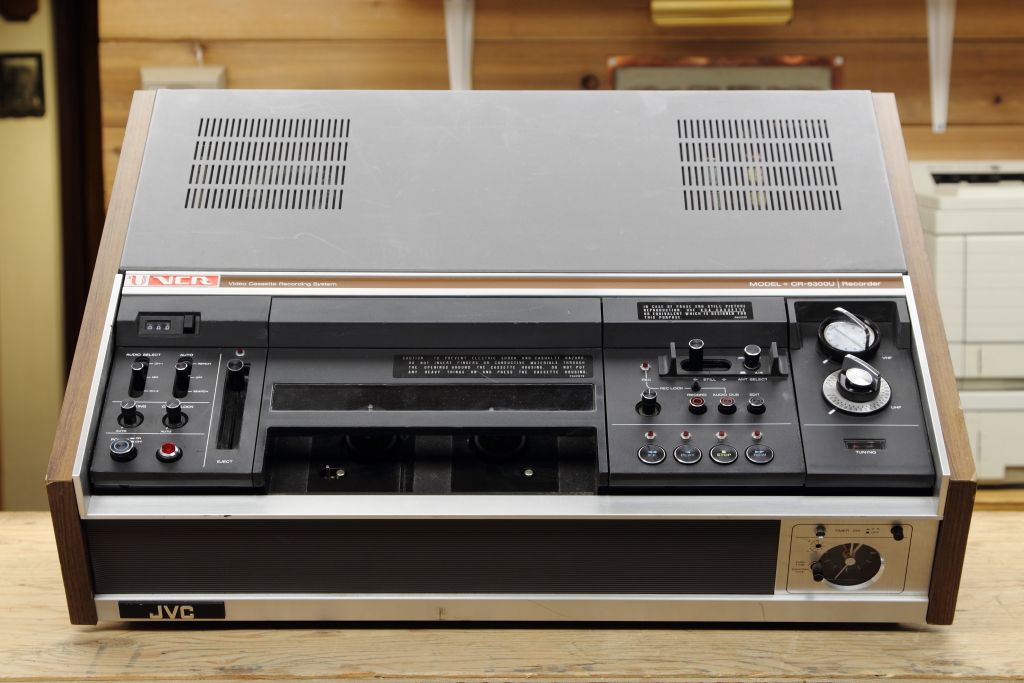 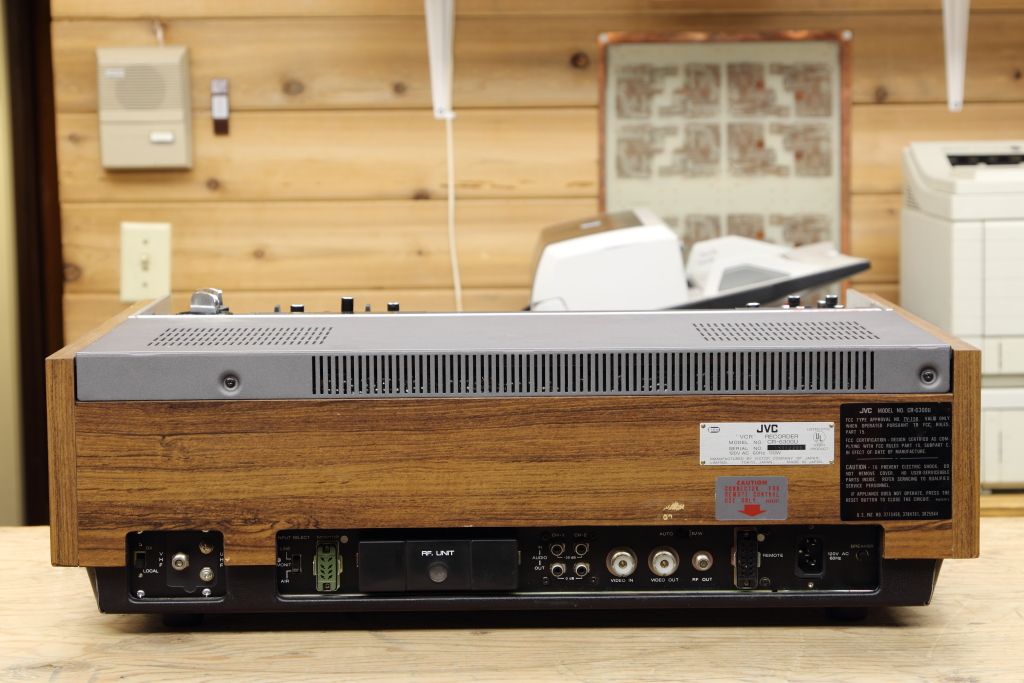 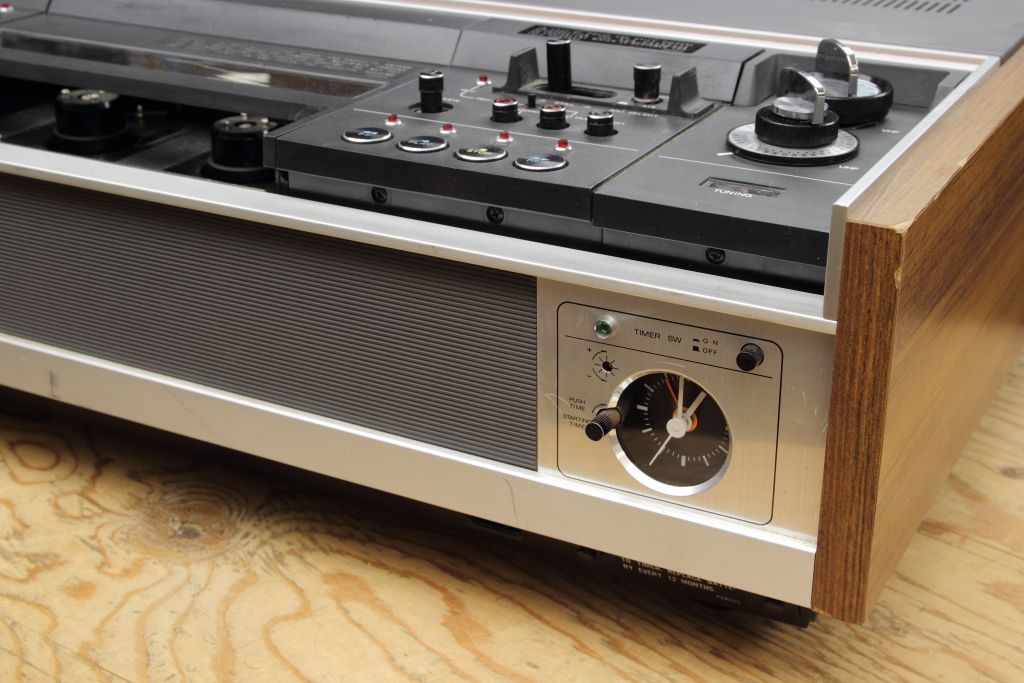 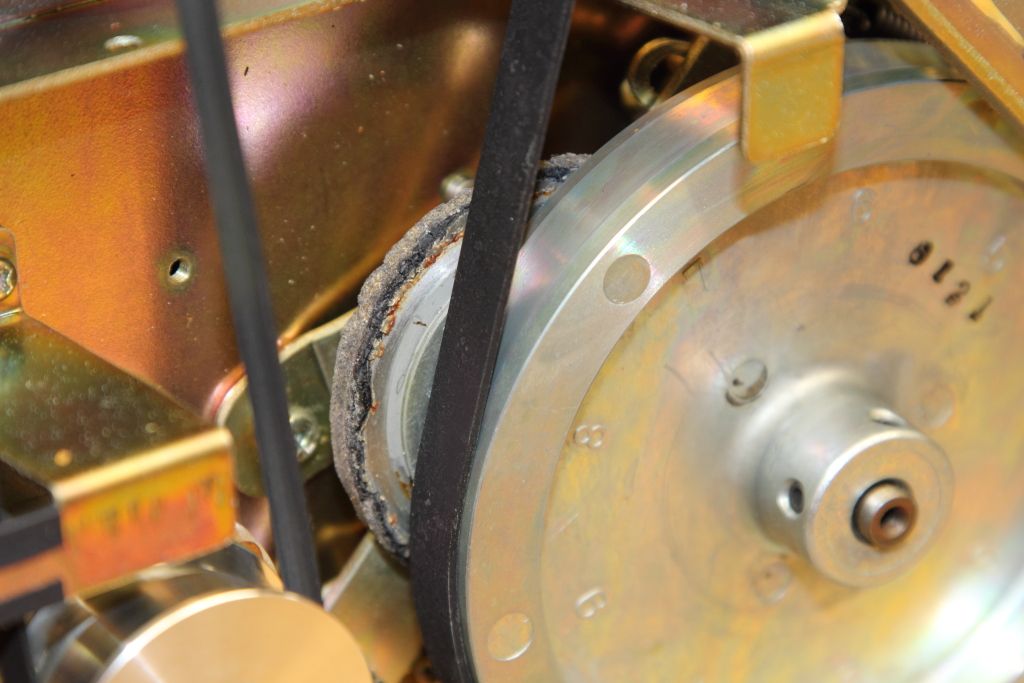 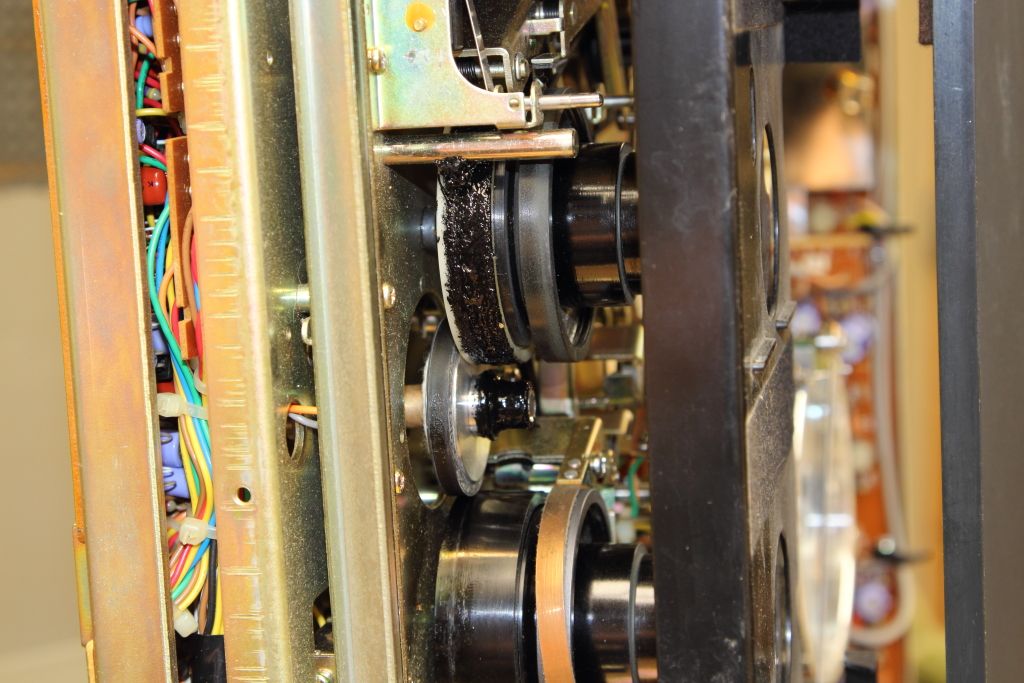 Mechanically otherwise it's fully functional.
|
|
#5
09-25-2024, 12:58 AM
|
|||
|
|||
|
JVC was selling top-loading 3/4-inch systems through 1984. Although those shown in the ad look a tad newer than yours
 I wonder whether JVC and Panasonic ever produced Hi-Band/SP machines. Anyone knows? It seems that Panasonic switched to M/MII and dumped 3/4-inch sometime in the early 1980s. JVC Launched front-loading 3/4-inch machine in 1985, but for how long it produced it? It was still a Low-Band machine. "Umatic" is Sony's brand name. JVC and Panasonic used either "3/4-inch system" or just "U".  Quote:
It was cheap garbage that TV news crews used because 1-inch machines were either too expensive or too bulky or both, and 16-mm film needed processing. Still, some broadcasters like the BBC shot higher-quality factuals on 16-mm well into the 1980s.
Last edited by DVtyro; 09-25-2024 at 01:08 AM.
|
| Audiokarma |
|
#6
09-25-2024, 11:49 PM
|
||||
|
||||
|
Quote:
The average consumer didn't have any VTRs until the 80s....Those folks who's estate was up for grabs had VCRs in the 70s (as well as a bunch of high end consumer HiFi gear)...For a consumer, any VCR in the 70s (especially if it was not beta or VHS) was an expensive high end piece of video gear to have.
__________________
Tom C. Zenith: The quality stays in EVEN after the name falls off! What I want. --> http://www.videokarma.org/showpost.p...62&postcount=4
|
|
#7
09-26-2024, 02:47 PM
|
|||
|
|||
|
Quote:
Personally I'd like for you to stop bashing what you perceive as inferior in your opinion, if you have a relevant fact or honest input to share with the people please do. Some of us started our careers with the "best of the day" and know what we're doing.
|
|
#8
09-26-2024, 06:38 PM
|
|||
|
|||
|
Quote:
Quote:
3/4-inch was barely better than Betamax/VHS. The original low-band had 320 LWPH in monochrome mode (I suppose it was able to use the whole band width for luminance), and 240 LWPH in color mode with the same pitiful 30 LWPH chrominance resolution - same as Betamax/VHS. It was a consumer format, adapted for pro usage. Broadcasters quickly adopted it after digital TBC had been developed, otherwise it was too shaky. Sadly, most Betamax/VHS VCRs did not come with a TBC. I guess 3/4-inch was OK for small blurry 1970s color TVs. It was used for throwaway daily news, which served as a filler between ads. For higher quality content some broadcasters used 1-inch EFP systems or film before M/Betacam came along. Feel free to browse KXAS-NBC 5 News Collection, although they screwed up the digitizing, converting to 30p. Quote:
|
|
#9
09-27-2024, 06:37 AM
|
|||
|
|||
|
Quote:
__________________
So many projects, so little time...
|
|
#10
09-27-2024, 11:50 AM
|
|||
|
|||
|
Quote:
|
| Audiokarma |
|
#11
09-26-2024, 09:21 PM
|
|||
|
|||
|
JVC might have been trying to grab a piece of the "prosumer" market with these: the educational/industrial crowd that couldn't go for film or 2" reel but needed a way to play and record, and possibly have a video camera available. That was a long way off with VHS at the time.
Someone at Kutztown was selling an early Sony that was rebadged as a Wollensak 3M.
__________________
Good headphones make good neighbors.
|
|
#12
09-28-2024, 02:58 AM
|
|||
|
|||
|
I don't think any of the JVC or Panasonic 3/4 decks were ever high band, this might have been a Sony only thing as I believe Panasonic exited the U-Matic arena after the AU-A series and JVC sometime in the later part of the 80's with the CR-800 series front loaders. I know high band originated somewhere in the mid-70s on some of the broadcast decks with the BVU designation but have never seen any in the wild. The only one I remember in the portable arena was the BVU-150 and that was an SP variant, I used this with a DXC-M3a for several years and while it did a spectacular job of recording SP on tape they didn't do so well on low band equipment, highlights would sometimes clip at the edges.
I've only worked with the Panasonic AU U-Matic once at a technical college so I can't give much of a review or opinion other than I remember it being very well built. The JVC CR-8000 series was a frequent guest on my service bench in my early years and the list of issues with these is best detailed in another post. The CR-800 was about the same as the Sony VO-7000 series editors but seemed a bit more user friendly. I think what you were referring to in the early digital arena was the 1125 line HDVS Sony HDD-1000 from the mid-80's maybe someone can nail down the year here. It was based on the Type-C format and ran the tape at double the speed and had an outboard digital processor but that's about all I know about it. One of our local stations had one in an OB van and I remember seeing it in operation during the time I was doing generator service for Onan in the 1980s. It took enough energy on its own to make a 6500 watt Onan Emerald generator grunt. Stupid useless history. Going back to my first U-matic that was a Sony VO-2600 I picked up for $20.00 at a 3M surplus store in St. Paul one rainy early autumn Saturday afternoon in 1984. It was marked as/is and plugged in would only show AUTO OFF. My school had a number of Sony VP-2000 players bolted to these rolling carts with either Setchell Carlson "Educator" or RCA Lyceum metal sets perched on the top. So the next day in school I carefully observed one of the VO-2600 decks in action in the media center and noticed there was a small light similar to our Panasonic top loader to sense the tape, after school I lifted the top of mine and saw the same light with a broken filament. Where I lived our nearest RadShack was the Hub Shopping Center and I was on my bike making my way in the rain to pick up some small wired light bulbs having no idea what the voltage was. I had an idea they were 12V so that's what I got and after my chores I carefully threaded in the new lamp and hit the power button. No AUTO OFF light! The deck had a tape stuck in it and having no idea what it was I hit play anyway and it threaded up. YAY!! It worked! Brett Lee wants his MTV... We didn't have cable but my neighbor next door did so I made a deal with him to mow the grass, shovel snow if I could tap his A-side cable, in those days Rogers Cable had an A/B cable system and MTV was on channel 28. I found a generic cable box at a flea market for $10 with a video out and already knowing Rogers was transmitting MTV on the FM band in stereo I used the tape in/out of my 800B stereo receiver and over that winter had amassed over 50 hours of MTV videos... seemed like the cool thing to do in those days. I was involved with the school media center anyway at this time and was allowed to take two tapes a week for keeping things in order. 40 years later most of the tapes I made survive to this day, only a few have either become sticky or have otherwise failed in some way that I don't recall. No they're not perfect quality by today's standards but good enough to be equal to what we had in the moment. Unfortunately the 800B was effectively and not so lovingly destroyed by my kid brother who took it upon himself to melt a dozen or so crayons on the 7591 tubes, it didn't have cabinet. Forgiven but not forgotten. I still have one of those 7591s and EM84 from the 800B floating around. Last edited by ARC Tech-109; 09-28-2024 at 03:06 AM.
|
|
#13
09-28-2024, 06:46 PM
|
|||
|
|||
|
Quote:
Quote:
|
|
#14
09-28-2024, 11:49 PM
|
|||
|
|||
|
Honestly don't think my collection is going to be much better than what's out there now, sure I have a TBC and everything is broadcast quality but even with the edge U-Matic has over the consumer formats I'm not sure that's enough to stand out. My capture medium is a Newtek Tricaster TC-550 that does studio quality mpeg but with how YouTube squeezes everything down I'm not sure how good it is.
You tell me, go check out a short video I did using analog BetacamSP of threading up my Type-C deck or my other videos under the user name of Brhat Lee. Everything was shot & edited in SP then captured using the SDI output of my DVW-A500 into my Tricaster as studio quality mpeg. BTW yes that is me. The question of why JVC didn't get into the MII format is an interesting one. JVC was owned by Matsushita the parent of Panasonic at the time but nothing was shared between the brands in terms of engineering or production. RCA sold the Victor name I think sometime in the later part of the 1960's and it became Japan Victor Company, I think it was Nivco who bought them and maybe someone here might know more on the historical facts. JVC has always been their own company on the lunatic fringe making some very well built and designed electronics for both the consumer and professional arenas, I say lunatic fringe because they were not one to follow the other leaders and an example would be the cassette well of a stereo cassette recorder. JVC was on the right hand side while the others were on the left. That being said it may have contributed to the stellar sound of the better decks compared to the likes of Pioneer, Sony and Onkyo. One theory is possibly JVC didn't want to front the investment in the layout & tooling to make their own MII equipment or maybe Panasonic was keeping it for themselves. Regardless of the reasons it was a wise decision on their part considering how fast MII flopped in the states. I know there was a short-lived allegiance to the format at both the BBC and NHK but they too seem to follow the beat of a different drummer, both of them have made excellent contributions to the technological advances of both analog and digital video over the years and while they drive on the wrong side of the road I have a lot of respect for them. I will say it seems to me anyway that Panasonic had leaned more towards the industrial and educational markets during the 1980s while JVC was more of the "upscale hard-core" consumer underdog that did things on their own and this appealed to those who liked to think outside the box. It was really good stuff all around and honestly beat the pants off Panasonic in many aspects, their professional end was really good electrically but some of the mechanicals were not as robust. A third reason could be they were focused on the development of the SVHS format, hard to say or even speculate really. Despite having some technical advantages over BetacamSP MII needed a new form factor cassette and betacam made use of the existing beta cassette shell until SP when the large tape was introduced. This could be argued and debated both ways but I think it was the backing & support of the professional video arena by Sony that really sold the Betacam format.
|
|
#15
09-29-2024, 01:07 AM
|
|||
|
|||
|
30p is not good enough. If you shoot with an interlaced camcorder (30i) the end result for a prog-scan TV should be 60p. See this channel for inspiration: https://www.youtube.com/@ReelyInteresting
M/MII vs Beta/BetaSP is clearly a fail from Panasonic. With M, Panasonic chose color format that was compatible with NTSC but not with Rec. 601 unlike Sony. With MII, Panasonic switched to U-loading as Sony Umatic, while Sony switched to M-loading with BetaSP/8-mm/DV as JVC/Panasonic had all along, and made the mechanism even smaller. Sony clearly won here. I wonder why JVC did not join Sony - was it the prior allegiance to Panasonic that prevented it from doing it? SVHS as well as Hi8 were better than BetaSP luma-wise, but worse in every other aspect. Sony advertised Umatic SP as the affordable editing platform for SVHS/Hi8, saying that Hi8 is "negative", while Umatic SP is the editing platform.
|
| Audiokarma |
 |
|
|








 Hybrid Mode
