
|
|
|
|
|
#1
 07-27-2006, 10:48 PM
|
||||
|
||||
|
British Color Experiments - 1950s mystery photos
http://www.whirligig-tv.co.uk/tv/history/history.htm says that experimental 405 line color started on 10 October 1955.
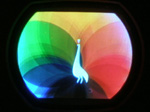
http://www.earlytelevision.org/pye_e...tal_color.html shows an experimental 405 line PYE color set. Then I came across a book titled "The 1950s" by Edith Horsley Domus Books A Bison Book Edith M. Horsley U.S.A./Quality Books Copyright 1978 Bison Books Limited ISBN 0-89196-015-5 Printed in Hong Kong Prduced by Bison Books Limited 4 Cromwell Place, London, England Published by Quality Books Inc. This book is written apparently in American English (e.g. "color," not "colour"), but has a great deal (perhaps majority) of English events as well as American and international. On page 91, in the 1953 chapter, it has a couple of color illustrations attributed to Radio Times Hulton Picture Library. These photos purport to show 1) a cameraman and subject experimenting with color TV in 1953; 2) a family watching an experimental color set (no date). So, my question is, what can we find out about what these pictures are really showing and their likely real dates? The studio camera is too compact to be a simultaneous color camera of that time, but could conceivably be a field-sequential camera. >>Anybody have any knowledge of this particular camera model? The color receiver looks like a mock-up or publishing cut and paste. Rectangular screen and too compact to be a round shadow mask tube, also definitely not a field-sequential color-wheel set. Despite all the doubtful features, the photos are in color, indicating perhaps that color was important to the original purpose. 
|
|
#2
07-28-2006, 01:23 AM
|
||||
|
||||
|
1953 Coronation color tv coverage
This site discusses the BBC television coverage of the 1953 coronation. A single paragraph is devoted to the experimental closed circuit color broadcast. I agree that it was possibly a field sequential system. Here's the paragraph:
"As befits the coming generation, two hundred children saw the Coronation procession by the TV of the future - in colour. They were at the Great Ormand Street Hospital in London. By closed-circuit they received pictures from three TV colour cameras overlooking Parliament Square" And the site: APTS | 2 June 1953 - Coronation Day Address:http://www.apts.org.uk/coronation.htm -Steve D.
__________________
Please visit my CT-100, CTC-5, vintage color tv site: http://www.wtv-zone.com/Stevetek/ Last edited by Steve D.; 07-28-2006 at 01:30 AM.
|
|
#3
07-28-2006, 03:00 AM
|
||||
|
||||
|
I remember reading about that on a BBC engineer's web site, which is sadly now gone. It was a color sequential system, complete with color wheel and it was supposedly transmitted the coronation via a closed-circuit post office line to an orphan's home, or children's hospital, or something like that.
David
|
|
#4
07-28-2006, 06:08 AM
|
||||
|
||||
|
It had to be field sequential because of the size of the camera. Because of the rectangular shape of the receiver screen, it was a projection type receiver, with a small color wheel, similar to the GE/CBS receiver design:
http://www.earlytelevision.org/field...rototypes.html
|
|
#5
07-28-2006, 07:58 AM
|
||||
|
||||
|
It might be projection, but here's my take on the 'color' set...
At the resolution at which we can access the photograph, it appears to be a professional shot including a real fire in the fireplace. Except for the center of the flame, the 'color TV' picture is the brightest element of the picture. It probably got that way for one of two reasons: it was latrer stripped in by the '50s graphics department or it is an 11 by 14 transparency in front of a diffusion filter in front of a lamp. My guess is those people were looking at a blank hole in that cabinet, itself perhaps a figment of some designer's concept of television cabinets (what are those three lower-left knobs for?!).
Last edited by Pete Deksnis; 07-28-2006 at 08:03 AM.
|
| Audiokarma |
|
#6
07-28-2006, 09:36 AM
|
|||
|
|||
|
The receiver could be real but not the image in it's screen. If that is a field sequential projection color receiver,the picture would be too dim to photograph in normal ambient light.
|
|
#7
07-28-2006, 11:49 AM
|
||||
|
||||
|
Great commnents and links! I never thought of a projection set.
A closeup up the TV doesn't reveal much more, but it does look like a transparency - note: no shutter bars, which are very hard to eliminate completely.
|
|
#8
07-28-2006, 11:57 AM
|
||||
|
||||
|
You are probably right about the picture being fake, but it is possible that it is real. By 1953 fairly bright projection tubes were available, and with careful photography it would be possible to get such a picture.
I wonder what the frame rate was. I've sent this thread to David Boynes in the UK, who probably will be able to give us some more information.
|
|
#9
07-28-2006, 12:42 PM
|
||||
|
||||
|
Quote:
Ain't technological archeology fun?
|
|
#10
07-28-2006, 05:06 PM
|
||||
|
||||
|
More tidbits....
It's amazing how little info there is on this colour broadcast. Probably lost in the shadow of the BBC's overwelming b&w coverage of the event.
Here's an excerpt from a timeline that mentions a PYE ( A British electronics co.) and American company connection? "1953..... the FIRST colour television programme was shown when the coronation of Queen Elizabeth 11 was transmitted. It was the result of an experiment between Pye of Cambridge and an American company. The vivid reds and dark blues worn by the Canadian Mounties and Royal Marines enthralled the children of the Great Ormond Street hospital who were watching this FIRST colour television broadcast." Here's the site: http://web.ukonline.co.uk/m.gratton/June/June%202nd.htm -Steve D.
__________________
Please visit my CT-100, CTC-5, vintage color tv site: http://www.wtv-zone.com/Stevetek/ Last edited by Steve D.; 07-28-2006 at 05:11 PM.
|
| Audiokarma |
|
#12
07-28-2006, 07:22 PM
|
||||
|
||||
|
More on "Coronation colour"
This recollection from a cameraman who worked the 1953 coronation broadcast:
"Whilst 20 million viewers watched the transmission in black and white, 150 children and staff of the Hospital for Sick Children in Great Ormond Street watched part of the procession in colour. Pye of Cambridge were given permission to set up three colour cameras on the roof of the Foreign Office, and by using a portable transmitter beamed the signal to Ormond Street to display colour pictures on two 20" sets. Twenty years later it would be standard practice for major OBs to be in colour. and today it is common place to deploy 20 to 25 cameras just for one programme 'Match of the Day.'" From this site:the current page http://www.tech-ops.co.uk/page86.html Cha I would sure like to see photos of the cameras and receivers. -Steve D.
__________________
Please visit my CT-100, CTC-5, vintage color tv site: http://www.wtv-zone.com/Stevetek/ Last edited by Steve D.; 07-28-2006 at 07:29 PM.
|
|
#13
07-28-2006, 08:27 PM
|
||||
|
||||
|
More of my take on the projection 'colour' TV...
As I see it:
(1) It is a professional photograph. Note the classic shading from dark on the left to light on the right. [We read from left to right. Our eyes seek light areas. Such things combine to produce a 'pleasing' picture.] (2) It is certainly a real home. Unlikely a photographer would generate a set with a real fire, a mantle with eight knickknacks (that carriage clock is blimey British isn't it), or three hanging pictures. It's too expensive; you can find a real home with less trouble. (3) Soft diffused lighting. There are no shadows. Compare this image to the other that is full of shadows. (4) Here's the biggie: there is strong evidence of retouching. If that is so, it's a short leap of faith to believing that the TV image was also 'manipulated'. My Analysis: The subject of the picture is a TV set displaying a color picture. The photo editor wants your eyes to find the TV set. To do that, HE (remember this is the early '50s) makes sure the TV is bright and has sharp edges. Look at the upper edge of the TV cabinet; the wall behind the set is light. How? It certainly did not come from that dim floor lamp. It most likely came from an artist's airbrush, because now the TV cabinet stands out from the dark wall since there is now sharp contrast between the cabinet and wall. But here's the smoking gun: look at the blowup of the TV cabinet in Wayne's other post. What your eyes didn't 'see' as anything but a natural highlight shows up as a bright artificial-looking line under the 'CRT' area. If that's natural, explain how it happened. You want to ask yourself, what's the source of illumination that is needed to cause that fine, bright beam? Or, for that matter, what on the TV cabinet is reflecting so much of the 'soft' lighting in that room? It looked natural in the overall picture because it created a sharp frame for the 'colour' TV picture , but it looks artificial close-up, because IT IS. It's virtual proof of retouching. Sooooo, what we MAY have here is a photograph of an experimental, operational colour TV system operating in a home and projecting an image bright enough to overcome room lighting and (as we used to say brainstorming magazine covers) so it will 'bang out' of the page. I don't think so. What we have here is a picture that was professionally generated to do a job. Of course, I could be wrong, but I don't think so. Pete
|
|
#14
07-28-2006, 09:43 PM
|
||||
|
||||
|
I agree that it looks fake overall
I just want to note that color printing in earlier processes was far poorer than more recently. It was quite common to outline objects in the black plate by hand to make the image sharper. Big outfits like Time/Life had much better processes than were used in many books (and therefore didn't need this handwork). This book was printed in '78, late enough to be better, but was on semi-matte paper, with poor contrast, and all the color images seem to have poor blacks. These two in particular have brownish lowlights instead of true black. Color balance on other pages varies all over the map. Anyway, it's hard to tell how many stages of manipulation this went through between 1953 and 1978, for either artistic rendition or just to get the plates to an acceptable level of color and detail.
|
|
#15
07-30-2006, 02:09 AM
|
||||
|
||||
|
I am pretty sure they are mock up pictures even if the set was a working set but we do know from references that there were experiments both in field sequential and NTSC formats for UK 405 line but that the UK did not broadcast in color until they commenced 625 PAL in the late 60s (like most of Europe).
I have to say though that the idea of seeing the Coronation of Queen Elizabeth in colour would have been fantastic. No greater way to show off colour television would have been possible. It is a pity the Pye's experiments did not include the service itself but only part of the parade. It is a pity that the Beeb never went into 405 line NTSC ....but that is a whole 'nuther story!!! (I could say the same here in Oz ...625 line PAL probably wasn't worth waiting 20 years for!)
__________________
____________________________ ........RGBRGBRGB ...colour my world
|
| Audiokarma |
 |
|
|








 Hybrid Mode
