
|
|
|
#1
 02-08-2013, 12:29 PM
|
||||
|
||||
|
RCA Televisions 1939 vs 1946
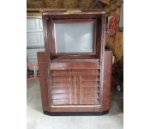
I was driving to an appointment today when I got to thinking about RCA television models from 1946 and from 1939-1941. The 1946 production consisted mostly of table top models, with only one console model. The console 630TCS was produced in very limited numbers as compared to the 630ts and even the 621ts. By contrast prewar production consisted mostly of console models and only one table top. The TT5 sold very poorly compared to the console TRK-12. Even the TRK-5 consoles were produced in higher numbers than the TT-5. What do you think made RCA have a change of heart in 1946 and produce almost exclusively table top sets when their previous best seller was the biggest most expensive console set they sold?
Last edited by vts1134; 02-08-2013 at 12:43 PM. Reason: Mistakenly stated TRK-9 was produced in higher numbers than TT-5. 
|
|
#2
02-08-2013, 12:33 PM
|
||||
|
||||
|
There was also a projection console in '46 - the 6PTK48.
|
|
#3
02-08-2013, 01:15 PM
|
||||
|
||||
|
The business climate changed. Before the war, I imagine the market consisted of the very wealthy plus some bleeding-edge techno geeks. After the war, manufacturers wanted to build a mass market, so it made sense to minimize cost. Reducing cabinet size is an obvious way to deliver the same performance at a lower price.
Phil Nelson Phil's Old Radios http://antiqueradio.org/index.html
|
|
#4
02-08-2013, 05:18 PM
|
||||
|
||||
|
The biggest change was the development of higher deflection angle crt's like the 10BP4 and 7DP4. All the pre-war crts have extremely shallow deflection angles and are very long forcing the cabinets to be designed as they were. With the developments during the war on crts, shorter ones could be produced allowing for smaller cabinets with no need for indirect view.
Another development was that of miniature tubes which allowed for much smaller chassis designs. Darryl
|
|
#5
02-09-2013, 02:22 PM
|
||||
|
||||
|
As I understand it, the FCC changed the standard from 441 lines to 525 lines just before WW2, and also mandated FM for the sound carrier. Most TV horizontal circuit designs could accommodate the 20% increase, but FM sound would require (obviously) an FM demodulator, instead of an AM detector. Oh, you could "slope detect" FM with an AM detector, but that doesn't work all that well. This is before intercarrier sets were invented.
The FCC could get away with this as there weren't that many older TVs out there back then.
__________________

|
| Audiokarma |
|
#6
02-09-2013, 06:24 PM
|
||||
|
||||
|
Were there many TV stations operating from 1939 until 1941, and if so, how many? Was it even worth it to have a TV set in those days if you lived anywhere else other than in New York? (I live near Cleveland, which did not get its first TV station until 1947; I think most areas of the US were in the same situation, some not getting TV until the mid-1950s.) I think New York's NBC O&O (owned and operated) station WNBT (now WNBC) was on the air during this period on channel 1, but I'm not sure. In any case, the station was probably ordered off the air by the FCC when WWII began, not to return until at least 1946. It may not have mattered much if the station was off the air during the war, as there likely were not that many televisions in New York at the time anyway.
__________________
Jeff, WB8NHV Collecting, restoring and enjoying vintage Zenith radios since 2002 Zenith. Gone, but not forgotten. Last edited by Jeffhs; 02-09-2013 at 06:33 PM.
|
|
#7
02-09-2013, 06:48 PM
|
||||
|
||||
|
Quote:
__________________
tvontheporch.com
|
|
#8
02-09-2013, 09:17 PM
|
||||
|
||||
|
Quote:
|
|
#9
02-09-2013, 09:55 PM
|
||||
|
||||
|
Yeah, they changed from 441 lines to 525 in 1941. Since there were only a handful of sets & precious little broadcasting then, it didn't really influence many people one way or another, I would think. 525 lines was prolly close to the technical limit of what was possible back then, prewar..
__________________
Benevolent Despot
|
|
#10
02-10-2013, 09:08 PM
|
||||
|
||||
|
It seems that in the pre-war days, RCA, as well as other companies, tried to sell TV's by making them look impressive. They were made like a high-end console radio WITH television to make skeptical TV buyers feel they were at least getting a good radio. After the war, RCA got much more serious about bringing TV to the mass-market. The 630TS was a no-nonsense practical set. If you notice their ads at the time, the 630 is often shown in partial pics or a small insert. It wasn't about the look of the set so much as pushing the benifits of having this new technology in your home.
|
| Audiokarma |
|
#11
02-10-2013, 09:56 PM
|
||||
|
||||
|
Quote:
 Didn't think the fidelity would be that great... Anyway, today, with no more over the air NTSC analog, someone with a pre-war TV set could modify an RF modulator to remove its FM modulator, and replace it with an AM modulated 4.5MHz source. (I think it was 4.5MHz for the sound carrier back then, if not, well use the correct frequency). This way, no need to touch the AM demodulator inside the set: it sees a pre-war AM sound carrier signal. Didn't think the fidelity would be that great... Anyway, today, with no more over the air NTSC analog, someone with a pre-war TV set could modify an RF modulator to remove its FM modulator, and replace it with an AM modulated 4.5MHz source. (I think it was 4.5MHz for the sound carrier back then, if not, well use the correct frequency). This way, no need to touch the AM demodulator inside the set: it sees a pre-war AM sound carrier signal.
__________________
|
|
#12
02-10-2013, 10:08 PM
|
||||
|
||||
|
You really don't need a AM modulator for sound. Slope detection works perfectly and sounds good. The only problem is that volume depends on RF level, and modern modulators have the aural carrier 15 db or more down compared to the visual carrier. In order to get decent volume you need to hit the set with at least +20 dBmv on the visual carrier.
We sell a modulator kit that is primarily for the British 405 system (AM video and sound), but it works for prewar American sets too. http://www.earlytelevision.org/405_modulator.html
|
 |
|
|













 Linear Mode

