
|
|
|
#1
 10-30-2024, 10:16 AM
|
||||
|
||||
|
Magnavision CH8000 Acquired!
 Okay, so I was not expecting much as these are famously terrible players but after five years of searching for one that was both in Canada and affordable I finally have a first-generation consumer laserdisc player. July 1979, so it's on of the early Greeneville built units assembled from kits shipped from Holland. On inspection I'm seeing the usual problems with 45 year old hardware and while it powers on and the laser works the spindle hub sounds like it's missing either a felt pad or rubber ring to prevent squealing and it has no motor speed regulation so just ramps up the motor as fast as it will go. The tracking motor belt has perished which is fine but while I had asked the seller to prevent the transport from moving (the lock screw was missing) using some bubble wrap wedged in the taser transport path (and they did and it seemed fine so I appreciate their effort) this has been moved more than once before without a lock screw and the gear that meshes with the rack has cheesed out and lost teeth. Short of laser path issues I don't mind putting a little bit of maintenance into this but is there a source for those gears? Seems only once in recent history has someone documented their work on these players and alludes that a Sams exists and I have no experience with these players. 
|
|
#2
10-30-2024, 02:30 PM
|
|||
|
|||
|
Yeah I remember those... had one as a kid planted on the combo console, the feet marks are still present to this day as I still own the combo.
So what little I do know is they were not the most friendly of beasts, as with any LD player I believe the spindle motor is servo ref that's derived from the disc itself, I remember ours going like a turbine with a bad disc it couldn't lock to. I seem to remember everything in these was built in little caged modules with no particular order, vintagemanuals.com has the service manual for the Magnavox CH8000CH03 at $27.00. I don't know the specifics on the revisions as ours was traded in for a Pioneer VP-1000 which survives today.
|
|
#3
10-30-2024, 05:02 PM
|
|||
|
|||
|
Quote:
https://www.youtube.com/watch?v=js5W5Tx9Png
|
|
#4
10-31-2024, 03:27 PM
|
||||
|
||||
|
Quote:
Quote:
Quote:
|
|
#5
11-23-2024, 02:38 PM
|
||||
|
||||
|
Well I've made my attempt to repair the gear and it seems to work.
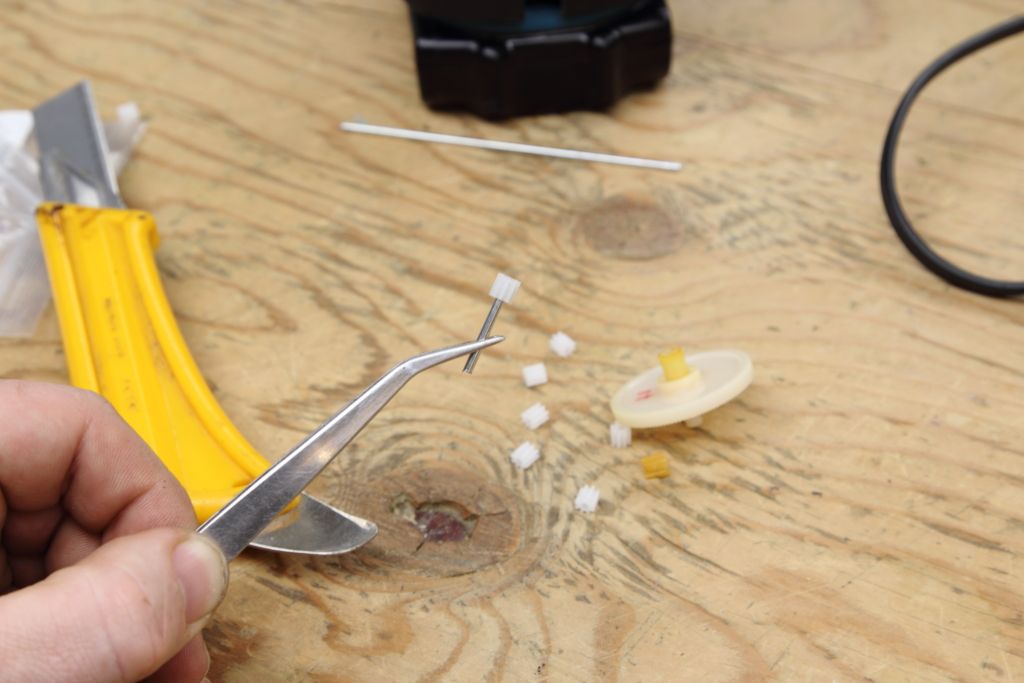 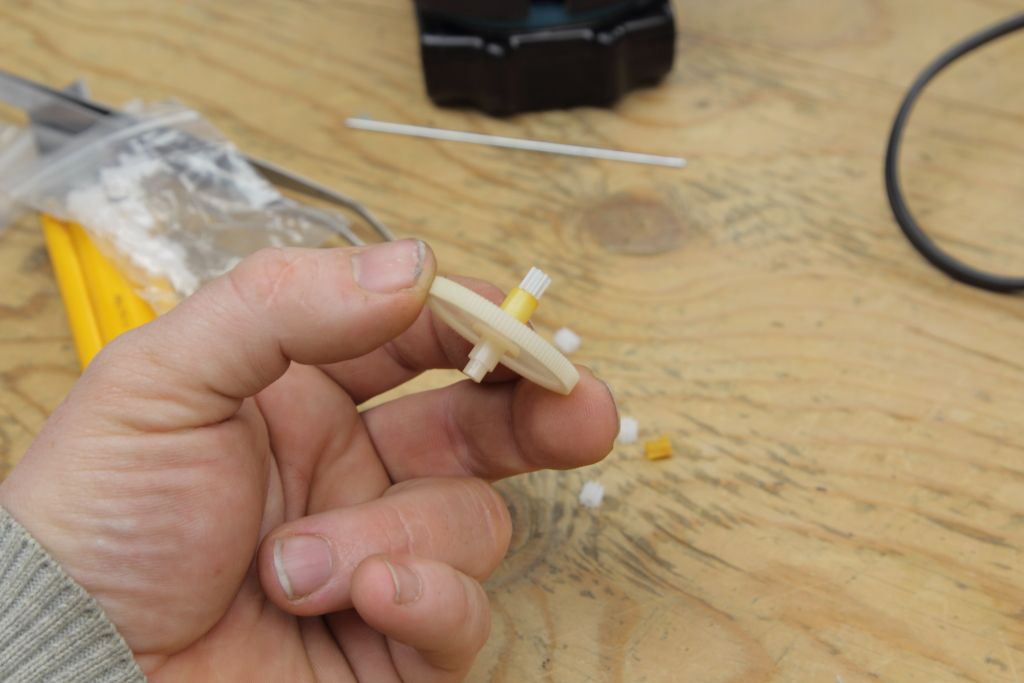 I made a writeup here: https://forum.vcfed.org/index.php?th...layer.1250708/
|
| Audiokarma |
|
#6
12-18-2024, 05:28 PM
|
|||
|
|||
|
Quote:
Wow 1979 -- When did VIDEODISK players come out,around the sane time didnt they? Last edited by Dude111; 12-26-2024 at 10:51 AM.
|
|
#7
12-26-2024, 02:06 AM
|
||||
|
||||
|
I have not heard of a "CH8000" before, is that maybe the Canadian version of the VH8000, or is the topic title just mis-spelled?
Thank you for your efforts and posting of the gear repair work. I have three of these machines, waiting for when I decide to do a restoration of one or more of them. Two of mine likely have the broken gear as well, and most of these that appear on Ebay seem to have the same problem. I worked at a store in the Chicago, Illinois area when they came on the market there in October, 1980, and the Magnavox reps were very clear about the shipping screw needed to protect the laser mechanism during transport. You may be aware that two men in Europe (I forgot what country) restored a Philips VLP-600, the European version of these players, and they put a video about it on Youtube. They also had one or more machines with the broken gear. The work they did to restore their player was a serious amount of effort, but they nicely documented it all. There is indeed a Sams manual (for the VH8000), number VDP-1. I have it, but it does not cover the laser/optical alignment, which is what these players all likely need in addition to the gear and belt repairs. The Philips VLP-600 manual does cover that work; I have a PDF of it that I can share.
__________________
Chris Quote from another forum: "(Antique TV collecting) always seemed to me to be a fringe hobby that only weirdos did."
|
|
#8
12-30-2024, 02:23 PM
|
||||
|
||||
|
I have scanned the two pages from the Photofact VDP-1 manual that describe and show the mechanical adjustments for the VH8000 players, but the file (9 MB) is way too big to attach here. If you send an e-mail address to me, I can send the file to you.
I have the needed gears and 2mm shafts ready to order here, but I do not know the length/size and width of the belt needed. If you can tell me what belt size worked for you, I would appreciate that too.
__________________
Chris Quote from another forum: "(Antique TV collecting) always seemed to me to be a fringe hobby that only weirdos did."
|
|
#9
01-01-2025, 10:48 PM
|
||||
|
||||
|
Quote:
 Quote:
 I'm at a point where I'm sure I'm hearing the two mirrors shifting around because they need to be reattached. I'm not looking forward to the nightmare of manually realigning the optics. They didn't have the right tools. I don't have the right tools either. Really I'm just hoping through some miracle it decides to just work. (it won't) Quote:
The main issue is that the transport grinds against the spindle and overshoots the home/shipping position. This version of the VH8000 does not have a microswitch to tell the player when it's at the endstop (or at the innermost point of the disc). There are two switches under the gearing assembly that sense other positions but nothing for the extreme edge. I'm really hoping the SAMS explain that since there is no other feedback mechanism I can see that has gone out of adjustment. 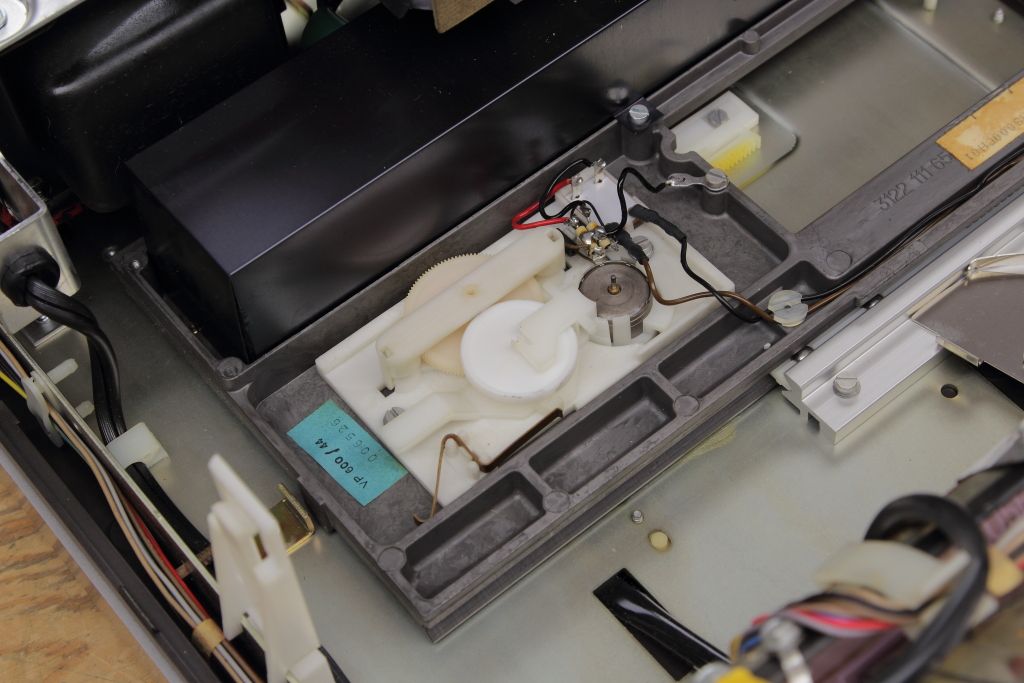
|
|
#10
01-02-2025, 01:20 AM
|
||||
|
||||
|
Thank you for the added notes. From both the Philips and Sams descriptions of the "inner stop adjustment", it sounds like it is a mechanical thing rather than a microswitch or similar, but you will know better since you have had your player apart.
In your picture of the mechanism above (also on your page describing the gear repair), what I just noticed utterly fascinates me: The mechanism has a label with the (Philips) VP-600 model number on it! If I remember right, Philips did not introduce the laser disc format in Europe until 1981, and that implies that all of the European players had the "improved" laser-optical assembly in them. (See the e-mail message I sent to you for more details.) Based on that VP 600 label in your player, you may also have the newer laser assembly, which would be a very good thing from what I understand. (What I do not know is, would that be related to player differences that you mentioned?) I am e-mailing the Photofact pages to you in a few minutes. I wish you success!
__________________
Chris Quote from another forum: "(Antique TV collecting) always seemed to me to be a fringe hobby that only weirdos did."
|
| Audiokarma |
|
#11
01-05-2025, 12:51 PM
|
||||
|
||||
|
Here's some extra photos.
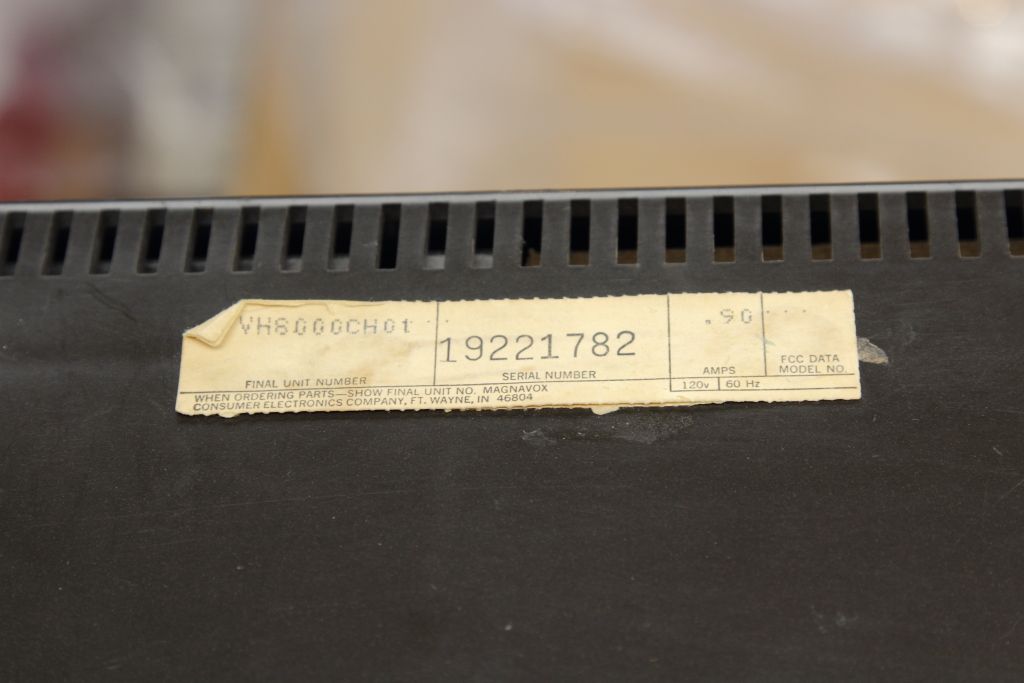
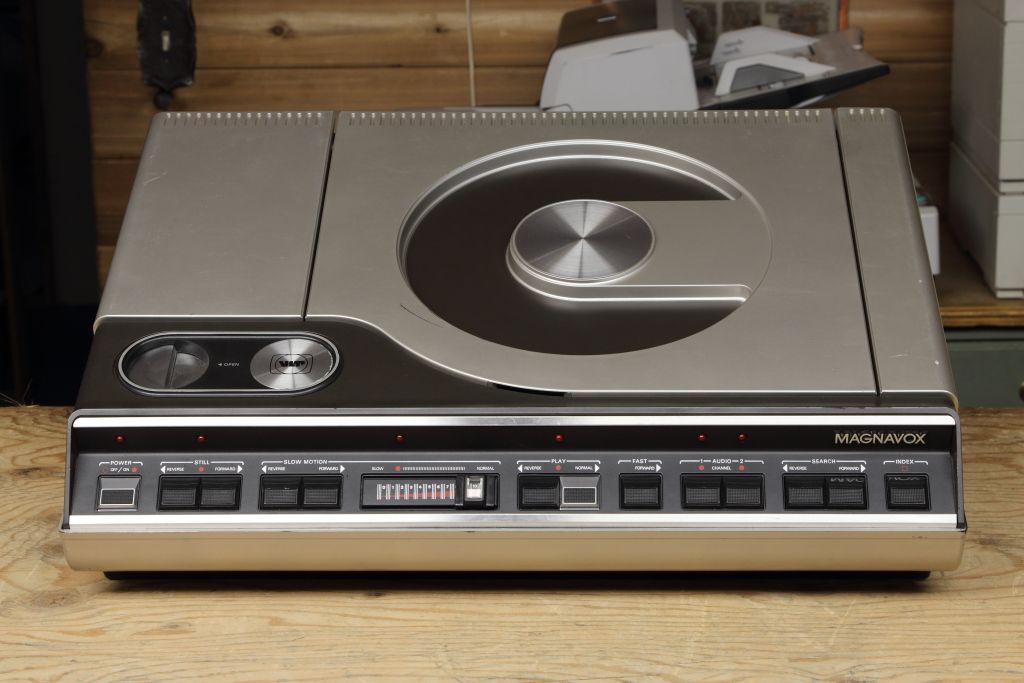 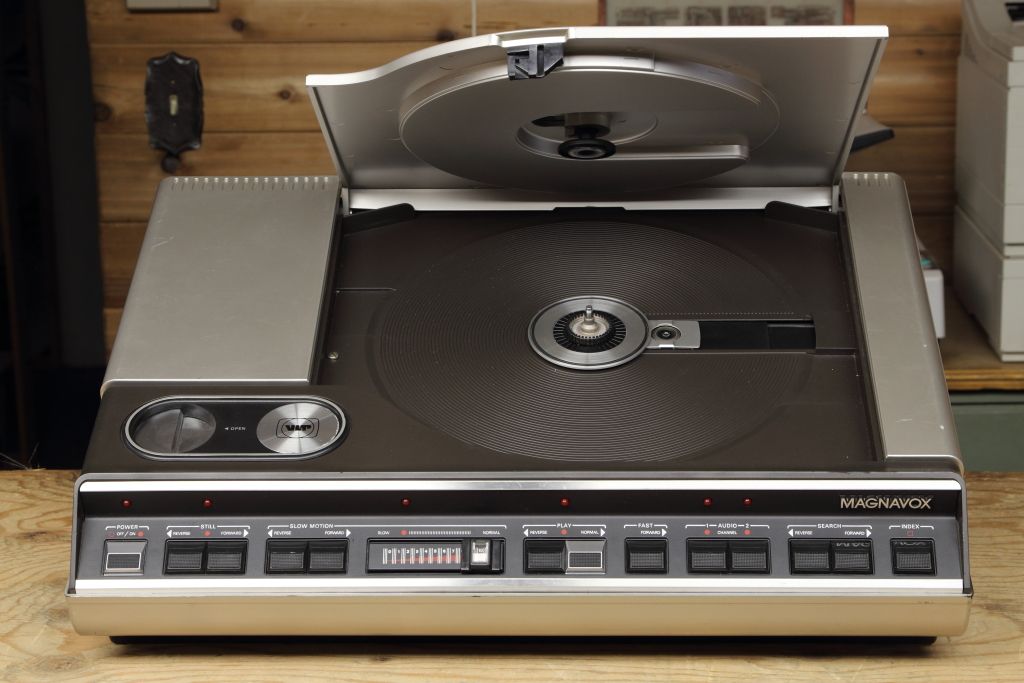 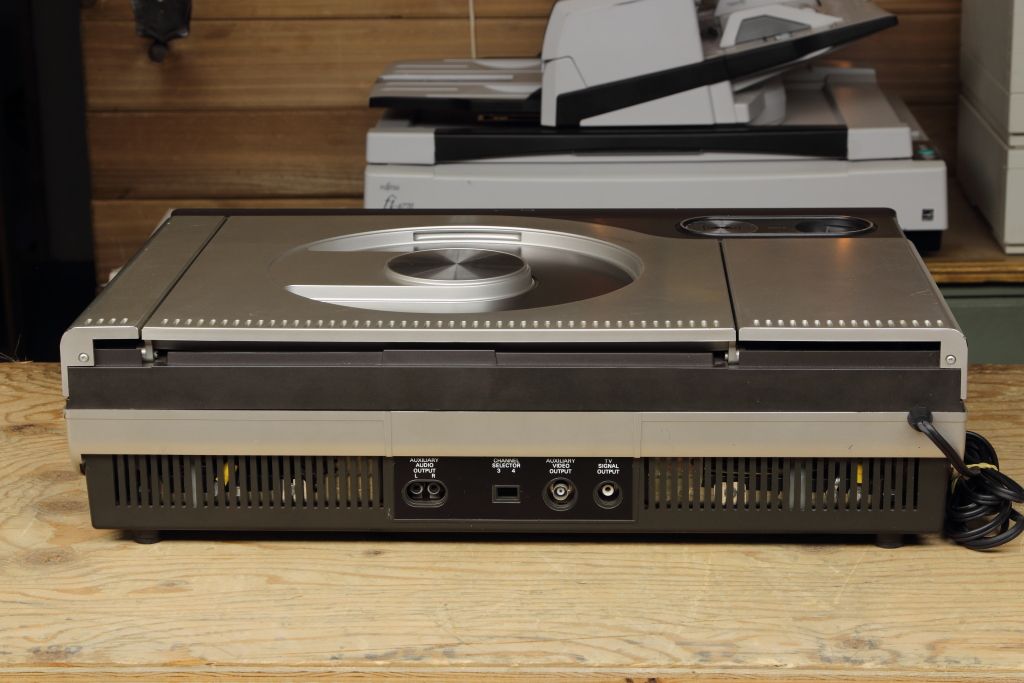 So here's where things get weird. If we look at the underside there's the serial number tag which is copied at least two more times inside and the production tag at the top of the photo. The serial number tag has paper and glue residue beside it, like the tag has been removed and replaced. The production tag you can tell that it's one sticker applied over another sticker. I can't easily peel it off. 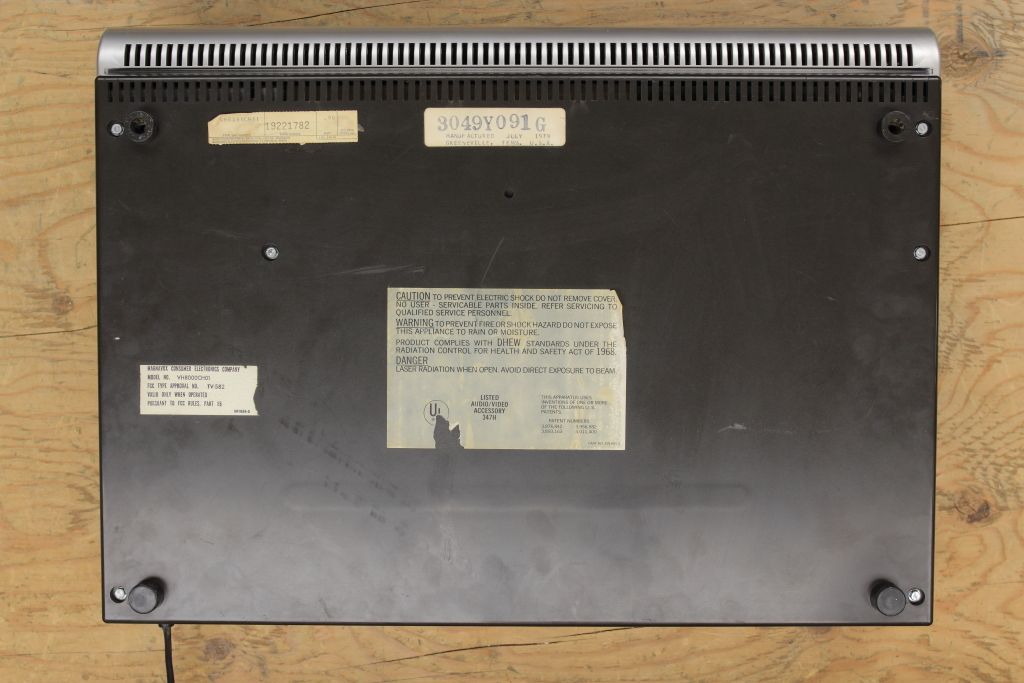 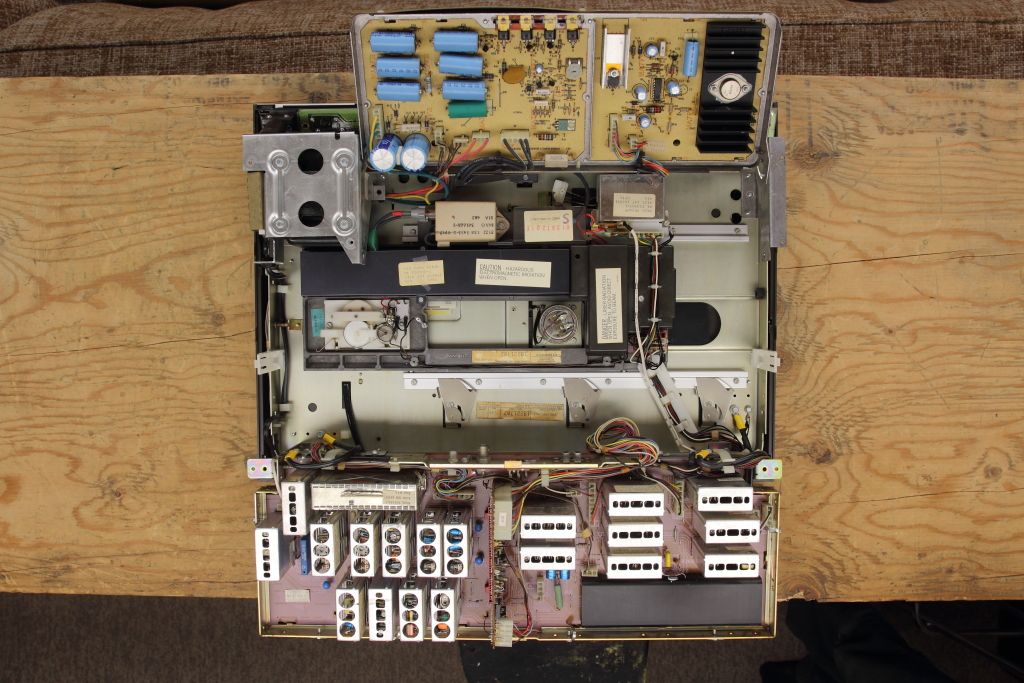 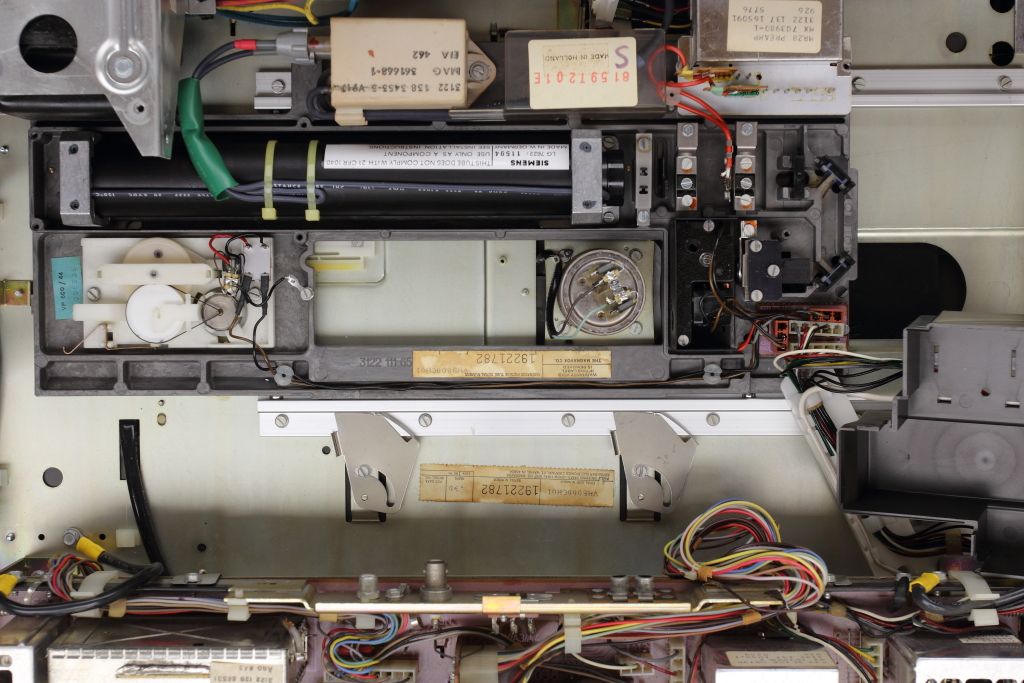 Here's the inside of the player (and a close-up of the laser path with the shields removed). I have not performed any preventative maintenance yet. When I received the player a lot of the original stickers had fallen off from poor glue but I was able to locate where each one went and glue them back down again. All of the metal cans are shields for little pluggable modules. Very easy to service but also a lot of contacts that can go dirty. So this pretty much completes my collection of first generation laserdisc players. I also have a PR-7820 that I picked up in 2019 (it was built in October 1979, so it was built three months after the Magnavision was built). 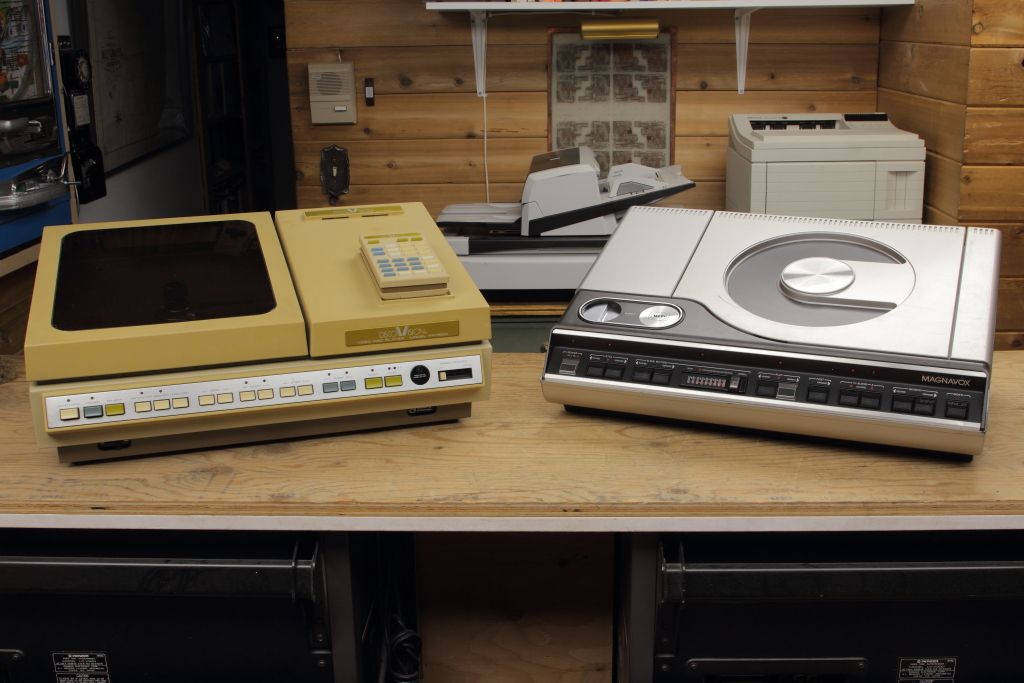 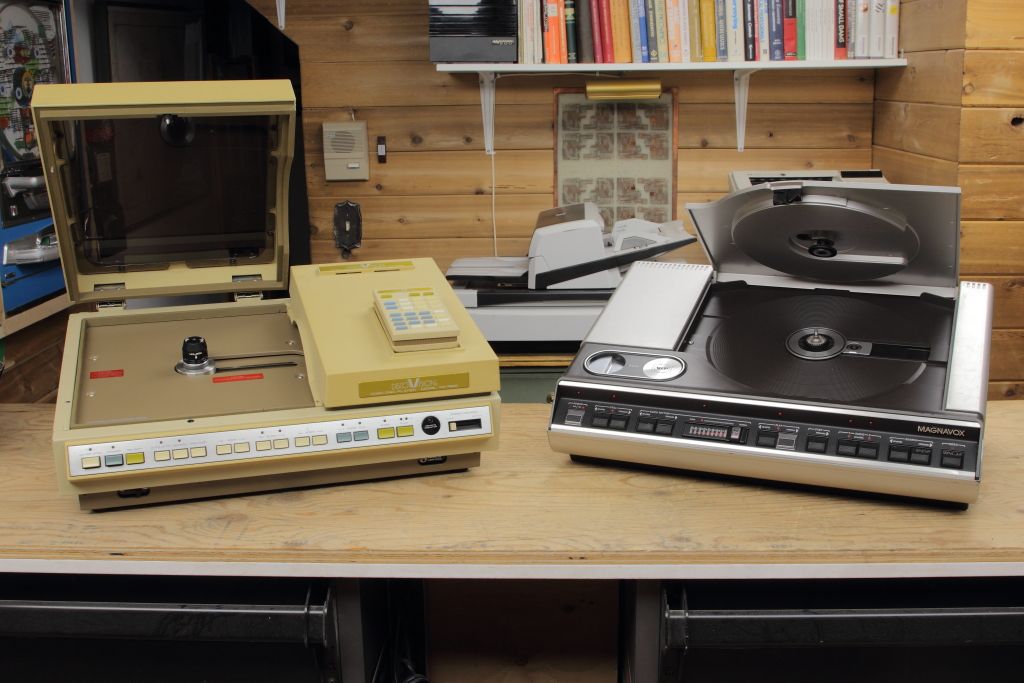 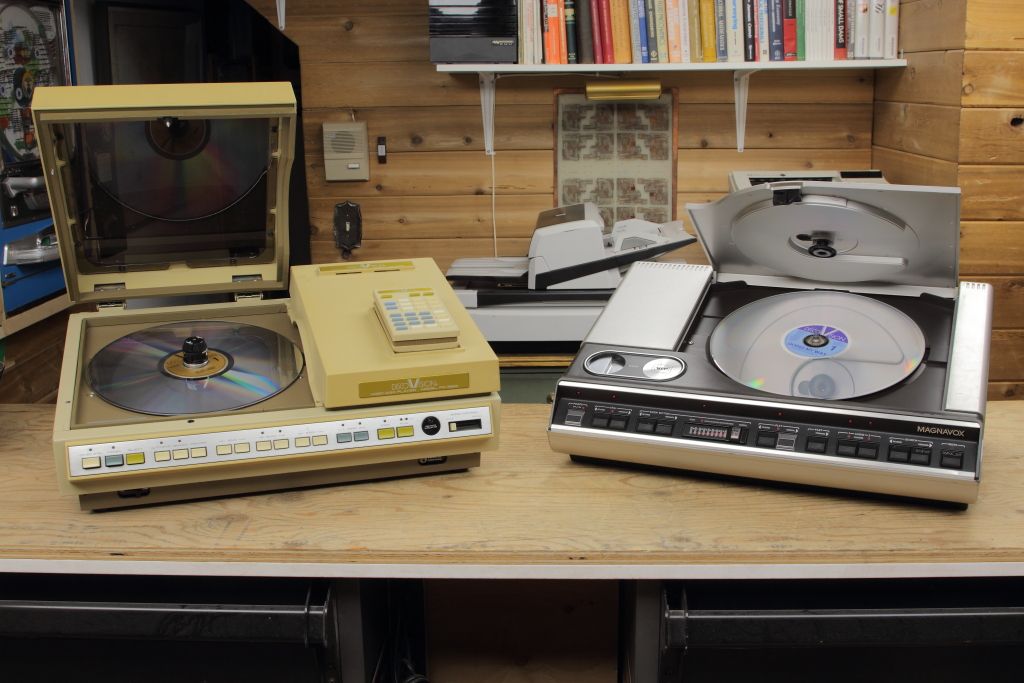 Just in case you are curious, as with all my photos are are free to reuse and distribute them, with credit given. ; ) Last edited by MIPS; 01-05-2025 at 01:41 PM.
|
|
#12
01-05-2025, 02:57 PM
|
||||
|
||||
|
Thank you for posting your pictures here.
I am not sure what the bottom-panel sticker oddities might mean, and the number/date on the production sticker do logically fit in line with your serial number based on my very short list of numbers and dates. Now seeing that your laser assembly ("slider" or "sled") has a matching serial number on it, I am less inclined to think that it was replaced after the original manufacture, unless you can tell that it was likely moved to your machine's assembly from another device (the old assembly).
__________________
Chris Quote from another forum: "(Antique TV collecting) always seemed to me to be a fringe hobby that only weirdos did."
|
 |
|
|





 Linear Mode

