
|
|
 |
|
|
Thread Tools | Display Modes |
|
|
|
#1
 07-10-2008, 10:24 PM
|
||||
|
||||
|
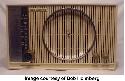
Jeff, the strips I have are unused, from a long-gone Zenith dealer. I think I am right that they are the strips, and not just paraphenalia that went with them. Seems like the little envelopes include a replacement "window" to fit on the Zenith "bullseye" tuning knobs, in the slot where you put that strip.
There was never a full-time NBC affilliate, Jeff. In the early days WBOC carried all the networks, but from what I've seen from old TV Guides the vast majority was usually CBS. WMDT carried some NBC programming in the 80s, but mostly just sports. Nobody local had the Tonight Show or SNL. Here where I live good quality antennas were real common. Most houses had them. (though they are dissapearing) Usually mounted on a tower or a repurposed utility pole, and often with a rotor. With a good setup you can get all the DC/Baltimore VHF stations quite clear, on analog at least. The UHF stations are iffy. Growing up, 10 miles from where I live now, we had a good Winegard antenna on a pole but no rotor. It faced the city; trouble with that was it was facing the dead wrong direction for the local channels; they came in so poorly that you really couldn't watch them. I have never viewed anything on 36 other than a slight difference in the color of the snow. I never realized, until you mentioned it, that there was such a translator-they certainly didn't promote it much. There is a 36 in far western MD, a PBS station, and that is what I thought was "tickling my tuner". If you go north of here not too far you can capture the Philly stations. I suspect there are some folks ideally located with a rotor who can pull in all 3 markets quite well. There is also WGAL-8 in Lancaster which I have watched a few times in my DXing days, as well as the NBC affiliate on 40, I think Wildwood, NJ, maybe still WMGM? I have had some luck in the past DXing Norfolk, and AK member JCFitz mentioned having good luck with pulling in those stations at least in the area of the VA/MD border. (probably very boring to the general populace here, but I enjoy talking about it with you, Jeff!) Pete, Quite a bit of good reading in many of those magazines. I like reading the "populars" just for the q&a columns. I will definately be on the lookout for some of those names!
__________________
Bryan 
|
|
#2
07-10-2008, 10:37 PM
|
||||
|
||||
|
7 VHF channels
Hello all,
This thread is far from boring! Someone mentioned earlier that the maximum number of VHF channels in a given city would be 7. I assume that those channels would have to be 2, 4, 5 or 6, 7, 9, 11, 13. Is that correct? In case anyone is wondering, I have evidence of an actual case where channels 4 and 5 are used, and sharing the same antenna as well! The big diplexers are quite something to behold! These two channels are separated by a guard band of 4 MHz, so they can coexist in the same area, and at the same time they are close enough that the same wideband antenna can be used (66-82 MHz) These two channels are in use as described above in Quebec City. Does anyone know of a similar installation elsewhere?
|
|
#3
07-10-2008, 11:26 PM
|
||||
|
||||
|
Quote:
Channels four and five can be and often were assigned right next to each other in the same area, however, because of the 4-MHz guard band you mentioned between the two channels (66-72 for 4 and 76-82 for 5). This situation exists in at least two metropolitan areas of the U.S. (New York City and Los Angeles) and also in areas such as Buffalo, New York which can receive a channel 5 station from outside the area (Buffalo itself has VHF channels 2, 4 and 7; the city is close enough to Toronto, Canada that channel 5 from the latter city is often received in Buffalo with a signal strong enough to watch). Note as well that channels 13 and 14 can and sometimes were assigned adjacent to each other in the same metro area; this was possible because there is a much wider gap between channel 13 and channel 14 (254 MHz; 13 is 210-216 MHz and 14 is 470-476 MHz) than even between four and five, or six and seven (there is an 86-MHz gap between the latter two channels--channel six is 82-88 MHz and seven is 174-180 MHz). UHF channels within the 14-69 range assigned in the same metropolitan area, however, must be separated by at least six channels to avoid interference between stations; that is, the nearest adjacent station to, for example, channel 14 would be channel 20 in a market with a channel 14 station and one on 20. The next available assignment in that market would be channel 26, and so on in six-channel increments, unless 26 was already in use locally; in the latter case the next station would be assigned on the nearest unused channel in that area. I was in Princeton, New Jersey for my cousin's wedding in 1985. The motel I stayed in had a TV set (likely fed by a master antenna system) on which I could receive all seven New York stations and channels 3, 6 and 10 from Philadelphia as well. The reception from the Philadelphia stations was not perfect; there was a lot of adjacent-channel interference on channel 3 from New York's channel 2, on channel 6 from New York's channel 5 and on channel ten from New York's channel nine, but the stations were there nevertheless.
__________________
Jeff, WB8NHV Collecting, restoring and enjoying vintage Zenith radios since 2002 Zenith. Gone, but not forgotten.
|
|
#4
07-11-2008, 12:50 AM
|
||||
|
||||
|
Quote:
 No wonder folks in your area had big, high-power antennas on rotors years ago. I find it interesting, however, that Salisbury, Maryland never had an NBC-TV affiliate station of its own, as NBC was at one time (20-30 years ago or more) the top-rated TV network in this country. The other two networks (CBS and ABC) seem to be well represented, as well as PBS and today The CW and MyTV (the latter probably on subchannels of the digital arms of 16 or 47). It's interesting that you mention channel 40 in Wildwood, New Jersey. Yes, that station is WMGM-TV; it is the only TV station receivable in that part of New Jersey without cable (this is, or was some time ago, mentioned on their website). Another city which has only one local station is Manchester, New Hampshire. Their only local station is WMUR-TV (ABC) channel nine, although I suppose it is possible, with a powerful antenna, to get stations on other networks from surrounding areas; today, of course, with cable and satellite, that area probably gets stations from Burlington, Vermont, Boston, Chicago [WGN], TBS and TNT from Atlanta and just about every other national "must-carry" cable network there is. There are, no doubt, other cities in the U.S. which have only one local TV station or no local TV whatsoever; Wildwood, New Jersey and Manchester, New Hampshire are just two examples that come to my mind as I write this. Cable and satellite service have brought every major network, broadcast and cable, to just about every corner of this country in the last 20-30 years or more, so even if a given metro area has just one station or even no local television service at all, it now can get TV reception "just like downtown" from every network--almost with no exceptions. The only exceptions I can think of are cases in which people cannot afford even bare-bones basic cable (local channels only) or are unwilling (or unable) to install a large antenna. Such cases (having to have cable/satellite or a very unwieldy antenna on a rotor) are very common in Western states such as Wyoming and in many parts of Colorado, Utah, New Mexico or Arizona, which have many small towns and rural areas some distance from TV stations; the tiny town of Sinclair, Wyoming (population 500), for example (I looked it up on Google) is literally in the middle of nowhere, being hundreds (yes, hundreds) of miles from the nearest city. The cable and satellite industry must do a heck of a good business in that part of the country, as without it there is probably no TV reception at all (if there is, which I doubt, it's probably only one or two channels, the reception of which on an antenna may not be and probably isn't even close to city grade), and darned little, if anything (!) to listen to on AM or FM radio.
__________________
Jeff, WB8NHV Collecting, restoring and enjoying vintage Zenith radios since 2002 Zenith. Gone, but not forgotten.
|
|
#5
07-11-2008, 11:45 AM
|
||||
|
||||
|
Quote:
__________________
Mom (1938 - 2013) - RIP, I miss you Spunky, (1999 - 2016) - RIP, pretty girl! Rascal, (2007 - 2021) RIP, miss you very much
|
| Audiokarma |
|
#6
07-11-2008, 02:15 PM
|
||||
|
||||
|
Quote:
I don't know how this small village ever got along without cable, though the locals obviously managed as I see the remnants of large near-fringe-area antennas (what few of them are left--most have been taken down by now and scrapped) on roofs and chimneys of houses all over town. The local bowling alley down the street from me still has a high-power antenna on a rotor, mounted to the chimney, but I have a feeling they might retire that installation in favor of cable or satellite next year. If I were living in Pittsburgh (or anywhere else) and were having trouble receiving any of the area's local TV stations, I wouldn't bother with a TV antenna; I would get cable or satellite and would not look back. There are areas of this country where TV antennas simply will not work (by virtue of sheer distance from the stations or terrain features; many small towns are literally hundreds of miles from the nearest city or are blocked by mountains from so-called "local" stations that may be only a few miles away), so satellite/cable is the only way people living in these areas can get any kind of TV reception. It would not surprise me if these people got along without television even as late as the '70s, listening instead to radio on what few stations they could receive, even if those stations were 100+ miles distant. Cable or satellite systems almost always get local channels from the nearest major city, even though the "nearest" city may be 100 miles away or more. In these deep-fringe areas, I would not be surprised if the satellite provider has only satellite service with local channels (not satellite without locals [the area's local channels being received in the usual way, with an outdoor or rabbit-ear antenna] as is an option in metropolitan areas), as, again, in areas 100+ miles from the nearest stations, an outdoor antenna, even a high-power monster on a 50-foot tower with a rotor and a mast-mounted preamplifier, either will not work at all or the results will be so poor the effort will not have been worth the trouble.
__________________
Jeff, WB8NHV Collecting, restoring and enjoying vintage Zenith radios since 2002 Zenith. Gone, but not forgotten.
|
|
#7
07-12-2008, 10:42 PM
|
||||
|
||||
|
Quote:
Come to think of it, over the air analogue TV, when I want to watch NBC, I watched channel 9 out of Steubenville instead of our local 11 because for some reason, 11 came in with a lot of ghosts and adjusting the rabbit ears didn't work while I got channel 9 a lot better. Channel 4 is tricky too, for some reason, their signal was weak and even in parts of the city proper, a lot of people have trouble getting it. So far with DTV, I can receive them much better though. Just for the heck of it, I did some experimentation and there are places like in Montana and North Dakota where the strongest stations you can receive via antenna are from Canada so I'm sure those people there watched the CBC and indy Canadian stations.
__________________
Mom (1938 - 2013) - RIP, I miss you Spunky, (1999 - 2016) - RIP, pretty girl! Rascal, (2007 - 2021) RIP, miss you very much
|
|
| Thread Tools | |
| Display Modes | |
|
|






 Hybrid Mode
