
|
|
|
#1
 06-30-2014, 09:37 AM
|
|||
|
|||
|
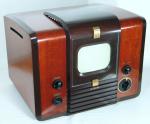
Dumont clifton fix
I have just spent a number of months restoring a Clifton and
After all is done I find the picture is fine and the sound is Almost one channel above the picture. This chassis was totally untouched And I do not think that it's wise to start turning too many screws. I would appreciate some thought from someone(s) familiar with Dumont and there tuners 
|
|
#2
06-30-2014, 09:55 AM
|
||||
|
||||
|
These sets have a so-called split IF. If the picture quality looks good, then the only thing you will need to adjust is the sound IF. You will not need to monkey with the tuner at all, and that's good because an Inductuner is tricky to adjust.
The only thing that has me worried, however, is your statement that the sound is nearly a full channel (6 MHz) off. That would seem to be more than the usual sound IF drift that is commonly seen on these kinds of sets. I would start by performing a sound IF alignment per the instructions in Rider.
|
|
#4
07-05-2014, 07:51 PM
|
||||
|
||||
|
The local oscillator is most likely off frequency.
Unless someone in the past has monkeyed with the video or audio IF, the local oscillator could be set to the other side of the channel. If you are using cheap consumer channel 4 RF modulator, it produces a double sideband am video signal. It is conceivable the video carrier is on the opposite slope of the IF response so that the picture looks good but the audio would be absent. Try adjusting the tuner across the channel and ensure the video carrier is on the correct side of the Video IF.
|
|
#5
07-05-2014, 08:58 PM
|
||||
|
||||
|
To align with Penthode's take on things, have you prodded the mica caps in the IF cans? And the mica caps not in the cans but part of the IF/LO section? Off by enough to hit the other SB but not so bad they present a no-signal condition.
|
| Audiokarma |
|
#6
07-06-2014, 10:14 AM
|
||||
|
||||
|
Quote:
Another test is to connect a rabbit ears to the set and look for FM radio, which should come in on the top edge of the former analog channel 6. As a matter of fact, back when TV was still analog, and you had a channel 6 TV station in your area, you usually could pick 6's audio on the bottom end of your FM dial. Since I'm not sure how the early Du Mont inputter tuner handled the channel 6 to 7 spectrum break, so someone with a working RA-102 please check me on this. If the tuner is not blacked out above channel 6 in the TV position, FM radio should be right there when a rabbit ears is connected to the TV antenna. James
|
|
#7
07-06-2014, 03:54 PM
|
||||
|
||||
|
Quote:
__________________

|
 |
| Thread Tools | |
| Display Modes | |
|
|







 Linear Mode

