
|
|
|
|
|
#1
 12-28-2025, 05:27 PM
|
||||
|
||||
|
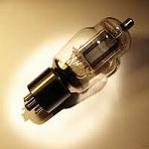
I see Tube Depot sells solid state replacements, but warns they will increase B+ by 10 to 20%, so they must not include resistors. I'm doing baby steps by replacing tubes first, then may consider solid state sub.

|
|
#2
12-31-2025, 12:34 PM
|
||||
|
||||
|
I sat down with the service info and reread the grayscale tracking procedure, partly in case it might be needed when the B+ is restored normal, but mainly to try to understand how it works.
The strange thing is that the CRT grid DC bias points in the chroma section are adjusted to correct highlight color, even though the controls are labeled "background" and really do affect the background more strongly than the highlights. The instructions say to set the "background" controls to counter any tint in the highlights and then adjust the G2 controls to counter the resulting tint in the shadows. After reading this carefully and looking at the electrical characteristics of the CRT, I realized that the CRT gun is actually a variable-mu (variable gain) tetrode, and when the G2 controls are adjusted after adjusting the grid bias, the CRT is operating at a different mu (gain), effectively changing highlight white balance. I also note that the CTC-5 called for a 8200 Kelvin color temperature, not as blue as the 10,000 Kelvin that was spec'd for later chassis. In any case, I don't believe accurate color temperature was ever achieved by eyeball, as the eye adapts too readily to color temperature changes. No TV repairman had a colorimeter in that era.
|
|
#3
12-31-2025, 12:59 PM
|
||||
|
||||
|
I try to clolor balance the black and white image against a black and white television of the era. If you had a colorimeter you could do it more accurately but in those days, especially with color drift as the set warms, I find eyeballing it against a P4 phosphor television is the best you can do.
|
|
#4
12-31-2025, 01:43 PM
|
||||
|
||||
|
Quote:
Last edited by old_tv_nut; 12-31-2025 at 01:50 PM.
|
|
#5
01-01-2026, 12:35 PM
|
||||
|
||||
|
Quote:
|
| Audiokarma |
|
#6
01-01-2026, 01:27 PM
|
||||
|
||||
|
Quote:
I have an I1 Pro3 spectrophotomter I use for calibrating my computer monitors, as the less expensive colorimeters I had in the past could not do a good job of matching different models of monitor. This discussion prompted me to get out the Minolta spot colorimeter I got when Zenith closed down their lab in 2000. Its last calibration was in 1998. It is way off when measuring the two LCD computer monitors (Viewsonic with sRGB gamut and HP with wide gamut). These monitors match visually when calibrated to 5000 Kelvin with the I1, but measure 4000 to 4400 with the Minolta. So, I guess the Minolta suffers the same problems as other colorimeters even though it was an expensive top-of-the-line unit at the time. I know the home-built colorimeters that Zenith used on the assembly line had to be recalibrated any time the phosphor formulation was changed. This was a long chain of calibrating a spectrophotometer (which used a photomultiplier tube at the time) using an NBS traceable incandescent lamp and then measuring a CRT with the new phosphors and calibrating the production line colorimeters to match those readings. I never talked to whoever was using the Minolta, so don't know if it required the same calibration procedure, but I suspect it did.
|
|
#7
12-31-2025, 01:52 PM
|
||||
|
||||
|
By the way, since I got some adjustable color temperature LED light panels, there's much less post processing needed to match the screen and room light in photos.
|
|
#8
01-01-2026, 01:38 PM
|
||||
|
||||
|
The standard incandescent bulbs I mentioned were calibrated with respect to standard bulbs maintained by the NBS, and originally traced back to the definitive standard consisting of a black-body cavity in a piece of platinum at a specified temperature
Today, of course, instruments use stable solid state silicon photodetectors. I believe (but don't quote me, have to research it) the base standard now consists of lasers whose output can be measured accurately thermally and then transferred to a standard photodiode and from there to secondary standards. Last edited by old_tv_nut; 01-01-2026 at 09:23 PM.
|
|
#9
01-01-2026, 08:10 PM
|
||||
|
||||
|
Here is an excellent PowerPoint Level 2 presentation by ISF. (Imagining Science Foundation) A certified calibrator will have completed Level 3 training.
https://visions4netjournal.com/wp-co...-2017-33.3.pdf
__________________

|
|
#10
01-02-2026, 05:58 PM
|
||||
|
||||
|
I got the new 5U4GBs from Tube Depot (new from JJ Elctronics, made in the Slovak Republic). They may have increased th B+ a few volts (hard to tell because of the loading effects of beam current) but have not fixed the brightness drift. Cathode voltage still drifts up about 10 volts during this long warmup.
Brightness still starts high and drifts lower slowly, and returns to too high after the set is off a while. Still wondering what can have this characteristic. Still a possibility of a resistor under the chassis where I can't get to it with the freeze spray? Don't know - more head scratching is in order. I tried running with the line voltage 5 volts higher to bring up the B+ some, but this doesn't seem to make a big difference in the drift. I'm not running totally out of brightness control range, but have to set it fairly high after the set is warm. Running through a slide show, I just see the usual effects of less than 100% DC coupling.
|
| Audiokarma |
|
#12
01-02-2026, 10:06 PM
|
||||
|
||||
|
Quote:
Unfortunately the horizontal circuit board is hidden behind the high voltage cage and practically impossible to get at, but I am going to measure voltages at the brightness pot tomorrow - slapping my forehead for not thinking of it before.
|
|
#13
01-03-2026, 06:00 PM
|
||||
|
||||
|
Changing the HV regulator had no effect.
I have determined that the delay line output (which feeds the high side of the brightness pot) doesn't drift, but the negative voltage for the low end of the pot as well as the wiper voltage does. Now to do a sanity check on how much the drift is at the wiper vs the low end. The wiper should be a voltage-divided version of the negative supply drift. If it's larger, there's some variable load on the wiper. If the drift is coming from drifting of the the negative bias generated by the horizontal output, it's going to be a problem to get at because all those components are under the chassis Last edited by old_tv_nut; 01-03-2026 at 09:26 PM.
|
|
#14
01-04-2026, 12:27 PM
|
||||
|
||||
|
Is the HV not steady? I would expect the raster size to change with changing the brightness setting.
There are various clues to rule out the culprit. A major clue is the time the process begins afterswitch on and how log it takes to complete the issue. My rule of thumb is Vacuum tubes heat the fastest and show complete final operation point is about three minutes. This suggests we can rule out the 12BY7. Next resistor heat from 3 to 10 minutes. Lastly capacitor complete heating from about 10 to 30 minutes. That is unless the capacitor is close to a vacuum tube or resistor. I have seen old paper and even film capacitors begin to increase leaking immediately after power up in a thermal runawy effect. That said, the problem occurring over a 10 minute period suggests the bias voltages around the 12BY7 are driffting. This could include the plate supply, the screen supply as well as the grid bias. You have determined the 12BY7 plate voltage is rising which suggests either the screen voltage is dropping, the cathode voltage is increasing or the control grid bias is dropping. I think careful monitoring and tabling the voltages on a timeline from cold start up to 15 minutes on will reveal what is going on.
|
|
#15
01-04-2026, 04:55 PM
|
||||
|
||||
|
One thing to try, which I have used successfully, is to measure the volatge at the bottom of the brightness control when its normal. Then let the set rest a while and connect an
external regulated power supply set to that value to it (the bottom) justas the set is turned on. See what happens to brightness, and measure other voltages as they change when it warms up.
|
| Audiokarma |
 |
| Thread Tools | |
| Display Modes | |
|
|









 Hybrid Mode
