
|
|
|
|
|
#1
 10-19-2019, 09:39 PM
|
||||
|
||||
|
By the way, the development of the color-splitting dichroic mirrors for color TV cameras is attributable to Mary Ellen Widdop at RCA. She presented a paper to the SMPTE in October 1952 (published in the Journal of the SMPTE in April 1953), but her work doesn't even get a footnote in the NTSC and IEEE publications on color TV. They present spectral curves with no personal attribution, which I think is a shame. Without her work, the early color cameras would have been even less sensitive than they were and would have required levels of lighting close to the original Technicolor.

|
|
#2
10-19-2019, 10:02 PM
|
||||
|
||||
|
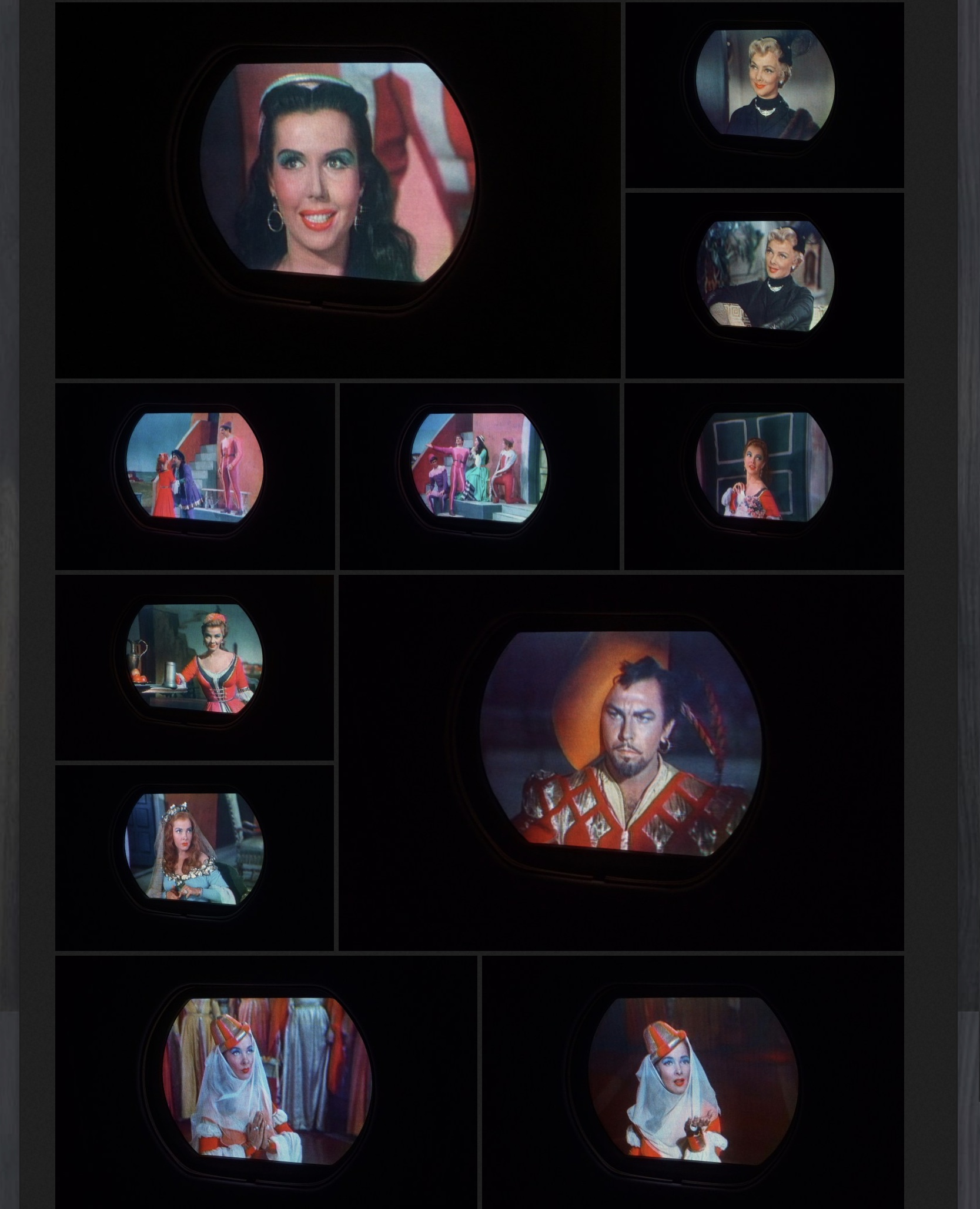
Is that Robin Hood movie the original production your talking about? It’s been mentioned several times in the forums. I’m going to post some Kiss Me Kate SS’s. Talk about color! It’s not natural but it gets my attention for showing what a 66 year television can produce.
__________________

|
|
#3
10-19-2019, 10:15 PM
|
||||
|
||||
|
Quote:
https://smile.amazon.com/Adventures-...s%2C203&sr=8-6 Last edited by old_tv_nut; 10-19-2019 at 10:18 PM.
|
|
#4
10-19-2019, 10:08 PM
|
||||
|
||||
|
That color splitting prism must have looked sensational. There was a women, her name escapes me right now, who was in charge of Technicolor, Natalie Kalmus? and was the bane of movie producers who wanted to express themselves as they saw fit and she excerted to much control over the productions.
__________________
|
|
#7
10-23-2019, 07:23 PM
|
||||
|
||||
|
Kiss me Kate is a my favorite for showing on old color. A saturated multi color palate in scenes that have a bright stage look to start with along with 14 years of advancement in Technicolor. I would like to see how the Westy handles the darker backstage scenes especially if it can show the difference in the Wynn/Whitmore dark suits. One brown, the other blue. I'll leave it to Marshall for the colorful scenes.
Yay! I made the movie as the auctioneer at ETF. My 25 frames of fame. And being a part of the restoration with a simple neck magnet makes it great. That's what we do here. And if you look closely at Robin Hood you will spot a palomino horse that went on to be Trigger after Roy Rogers bought the horse from Hudkin's Stables for $2500.
__________________
“Once you eliminate the impossible...whatever remains, no matter how improbable, must be the truth." Sherlock Holmes. Last edited by Dave A; 10-23-2019 at 09:21 PM. Reason: text
|
|
#8
10-23-2019, 09:02 PM
|
||||
|
||||
|
You are right, I focused on the color. I just completed a few screenshots from Kiss Me Kate. I will add the suits. :-) and post here.
Your contribution is much appreciated Dave. You saved us a lot of work trying to fabricate a workable magnet. Edit: BTW, Your in the credits.
__________________
Last edited by etype2; 10-23-2019 at 09:09 PM.
|
|
#9
10-24-2019, 02:58 PM
|
||||
|
||||
|
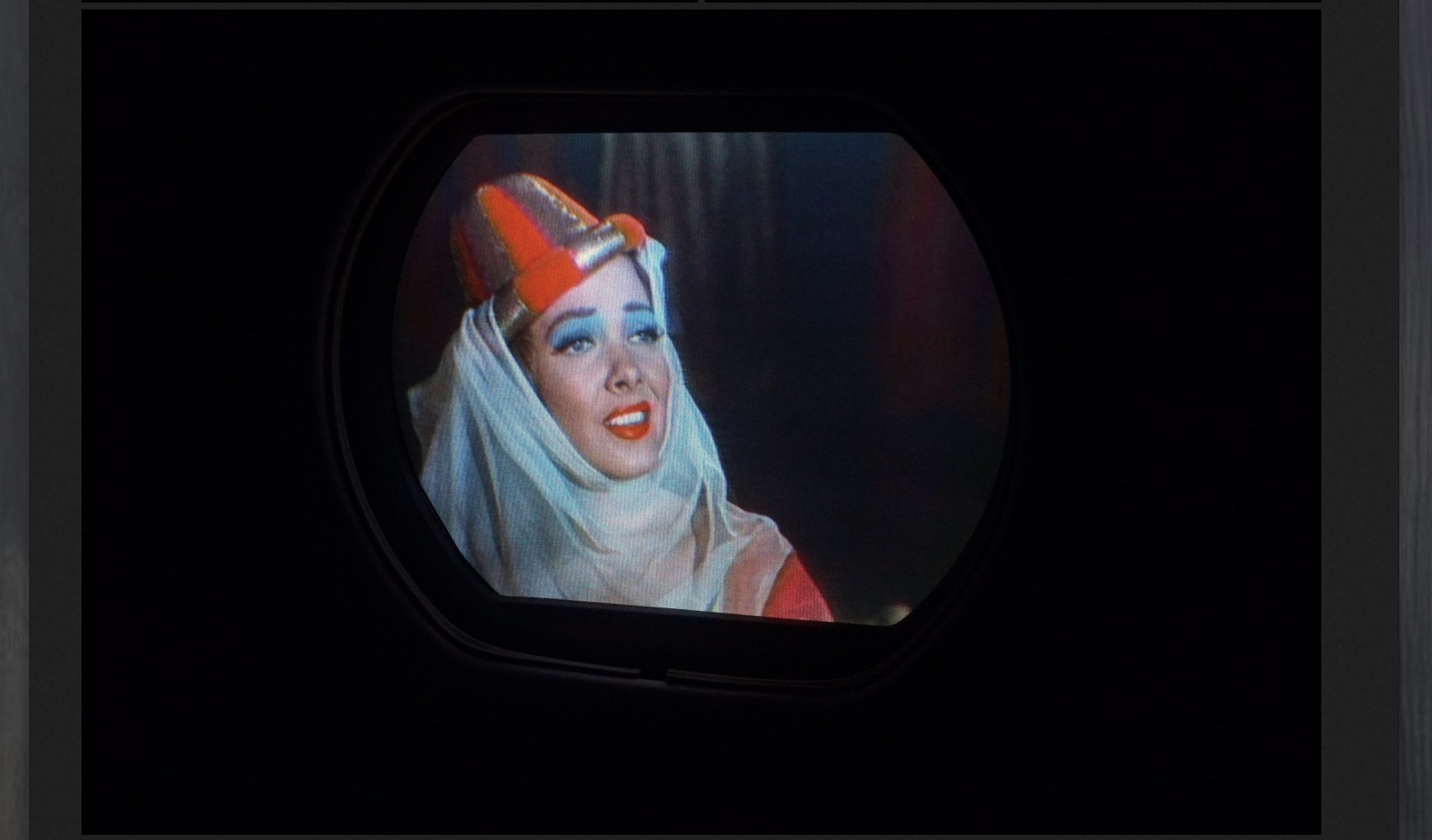
Here the scene Dave requested. Not to inspiring. Some colorful shots from the movie Kiss Me Kate. Natalie Kalmus, co-owner of Technicolor, consulted in the color production of this movie. Go here to open an image carousel to view full resolution images. https://visions4netjournal.com/westi...carousel-10889
__________________
|
|
#10
10-24-2019, 03:53 PM
|
||||
|
||||
|
Is that set capable of producing a real green? My CT-100 sure was. For tests
of green I like live golf. OR bright, saturated, magenta? The acid test of any color TV is to get a bunch of stills, often of flowers, as well as less saturated ones. Then copy those to a USB key or Blu-ray disc, and play them on a blu-ray player. Take shots of the color TV. Then open up Photoshop and load up each original and the TV shot at the same time. Run the color TV at the same time too, with the same shot. Then adjust the photo that you took of the TV screen on your monitor so that it exactly matches the actual color TV screen color. Then save that modified file. You then post both the original slide that you played, and the retuned file off your computer. This means that when a viewer looks at both at once on the computer, the DIFFERENCE will be EXACTLY what it was in reality. In other words, doing this compensates for differences in rendition on the web viewer's monitor. I did this for my CT-100. The file pairs are posted here in an old thread.
|
| Audiokarma |
|
#11
10-24-2019, 06:33 PM
|
||||
|
||||
|
Quote:
In an early post, I noticed my camera was not processing green as I saw it on the 15GP22 and close on the 3 inch LCD screen of the camera. I watched the shot of the crying watchman (Oz) being processed on the LCD screen of the camera and when completed, weak green. I noticed my iPhone X seems to process the greens better in the movie I posted but suffers from a shutter bar that scrolls the screen from bottom to top which changes the colors of shot. That effect is definitely not there when viewing the 15GP22 directly. I wanted to shoot the movie on my camera but unable to download hi density file from camera to iPad. I no longer use a desktop and no Photoshop. I do have third party editors.
__________________
Last edited by etype2; 10-24-2019 at 06:36 PM. Reason: Typo
|
|
#12
10-24-2019, 05:44 PM
|
||||
|
||||
|
A 15GP22 should produce exactly the same greens and cyans in either the CT100 or the Westy if the color demods/matrix circuits are correctly adjusted to NTSC specs.
A 15GP22 will not produce as deep violet-blue, purple, or saturated magenta as later tubes because the blue phosphor color is more toward cyan than the later sulfide blue. However, in later sets, when the demodulator gains and angles were adjusted to get a good range of skin tones with the later phosphors, the rendition of purples and magentas was thrown under the bus because there are no well-recognized object "memory" colors in that range. So, even though the later tubes could produce more saturated magenta of the correct hue, the demodulators might not output the right signals to get it. EDIT: then in the 70s, "auto color" came along, which essentially made sure any purplish or greenish skin hues were suppressed. In the simple circuits in most sets, this meant that only cyan and red-orange hues were normal strength, and green and magenta saturation was reduced greatly. The only exception was RCA, whose circuit only affected hues near red-orange (skin), and left strong greens and magentas alone. Last edited by old_tv_nut; 10-24-2019 at 05:49 PM.
|
|
#13
10-24-2019, 06:16 PM
|
||||
|
||||
|
I was looking to see what the set did with dark tones and it did a great job. Not inspiring for sure compared to the others but it did answer my question. It can handle subtle dark tones. A great thread.
__________________
“Once you eliminate the impossible...whatever remains, no matter how improbable, must be the truth." Sherlock Holmes.
|
|
#14
10-24-2019, 06:18 PM
|
||||
|
||||
|
Quote:
|
|
#15
10-25-2019, 05:34 AM
|
||||
|
||||
|
re: Kiss Me Kate
One thing to remember with Kiss me Kate is that it was filmed in 3D using the ye olde worlde twin camera setup ... not sure of the originating film stock ... prints were ANSCO I believe... and of course lit to handle the 1/2 stop light loss because of the polarising filters.
Note the twin cameras... what a nightmare that must have been ... and of course most 3D movies were also shot with 2 or 3 track stereo sound.
__________________
____________________________ ........RGBRGBRGB ...colour my world
|
| Audiokarma |
 |
| Thread Tools | |
| Display Modes | |
|
|









 Hybrid Mode
