
|
|
|
|
|
#1
 07-16-2025, 04:27 PM
|
||||
|
||||
|
Update July 16, 2025
Good day to all. The last CW transformer and socket repair may have fixed the hue drift. Mike reports after 3 days of cooking the CTC-5, the set is stable. If all continues well, we are looking at a July 22, 2025 delivery.
__________________


|
|
#2
07-22-2025, 12:01 PM
|
||||
|
||||
|
The restoration by Mike Doyle was completed today with the delivery of the RCA CTC-5 Chandler Deluxe model to my residence. Watch a 3 minute video to see the results.
The video link: https://videos.files.wordpress.com/v...y-movie-93.mov  Update July 20, 2025 Update July 20, 2025
__________________
Last edited by etype2; 10-26-2025 at 03:45 PM.
|
|
#3
07-23-2025, 03:29 AM
|
||||
|
||||
|
Update July 23, 2025
 Direct view, full size screenshots. Tap or click on links to view full size 4000x6000. https://i0.wp.com/visions4netjournal...132.jpeg?ssl=1 https://i0.wp.com/visions4netjournal...134.jpeg?ssl=1 https://i0.wp.com/visions4netjournal...136.jpeg?ssl=1 https://i0.wp.com/visions4netjournal...138.jpeg?ssl=1 https://i0.wp.com/visions4netjournal...139.jpeg?ssl=1 https://i0.wp.com/visions4netjournal...140.jpeg?ssl=1 https://i0.wp.com/visions4netjournal...141.jpeg?ssl=1 https://i0.wp.com/visions4netjournal...137.jpeg?ssl=1 https://i0.wp.com/visions4netjournal...145.jpeg?ssl=1 https://i0.wp.com/visions4netjournal...146.jpeg?ssl=1 https://i0.wp.com/visions4netjournal...148.jpeg?ssl=1 https://visions4netjournal.com/wp-co.../IMG_8091.jpeg
__________________
Last edited by etype2; 07-23-2025 at 03:59 AM.
|
|
#4
07-25-2025, 08:59 PM
|
||||
|
||||
|
That is looking really good. The CTC5 Deluxe chassis has wider chroma bandwidth which may partially account for the great performance.
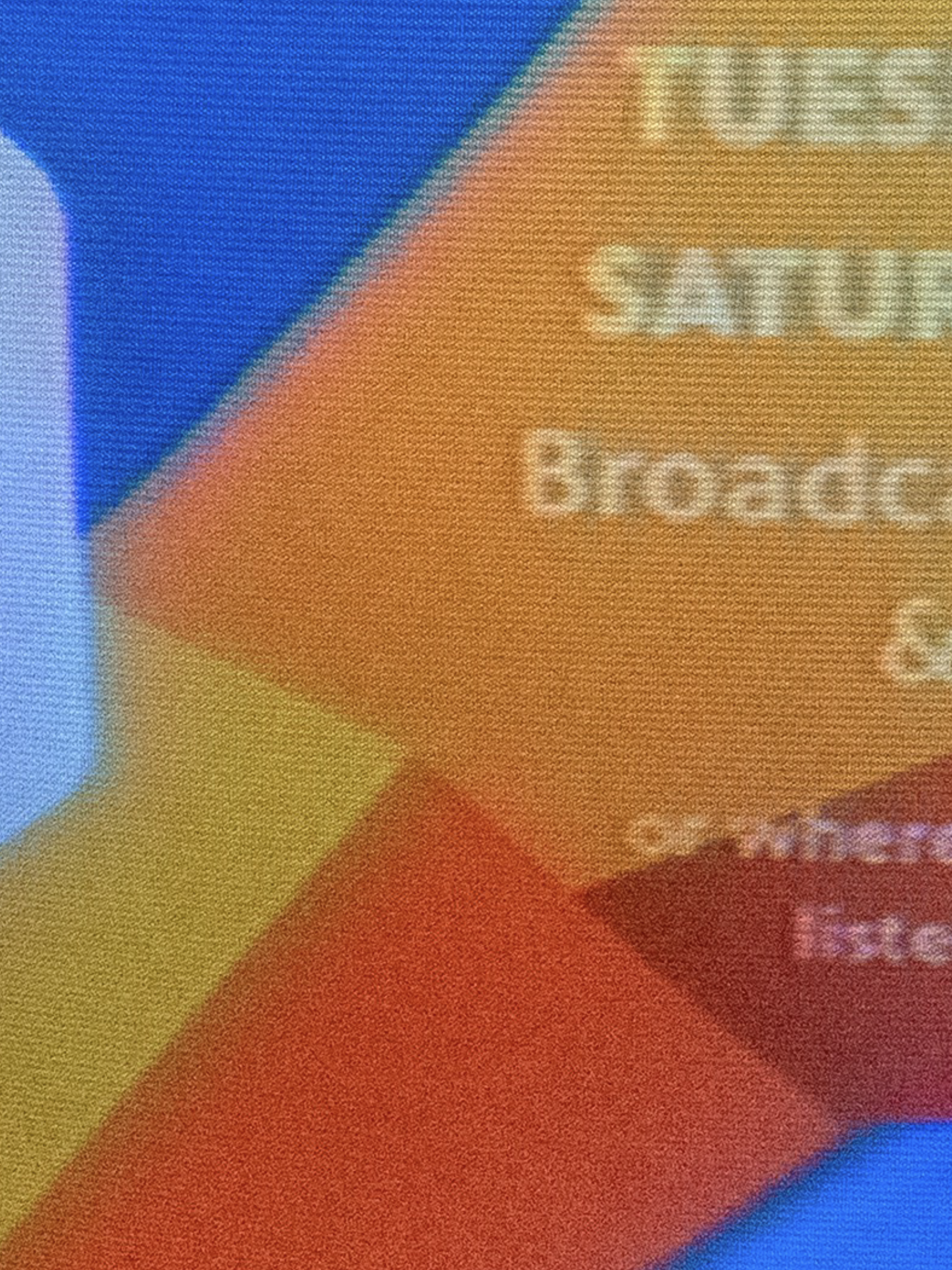
An interesting note: I recall seeing a paper published in the RCA review around 1955 on the effects of quadrature crosstalk in NTSC chroma demodulation. The CTC5 Deluxe chassis stands apart from the CTC4, CTC7 and the chassis's that followed in that the receiver chroma channel sidebands are asymmetrical: that is it is like the I channel in the CTC2 (CT100) chassis. This would lead to greater chroma resolution (approaching 1MHz as opposed to 500kHz on the other simplified chassis RCA sets. The increased chroma resolution would however be achieved at the expense of introducing quadrature crosstalk. i cannot recall the conclusion of the article in the RCA Review. But I alsways wondered if the CTC5 Deluxe chassis was the outcome of that paper. The crosstalk distortion would be evident as an odd coliored edge at saturated color transitions. Eg on vertical edge transitions between colors. Would you be able to to take a close up of a vertical edge where there is a horizontal saturated color transition say between Red and Blue? The CTC5 Deluxe uniquely would be the only color receiver to demonstrate if the improved chroma resolution offsets any minor quadrature distortion present. Here in a 1977 RCA Review paper. I was sure I read an earlier paper about is at the time the CTC5 was being designed. https://www.worldradiohistory.com/AR...w-1977-Mar.pdf
|
|
#5
07-25-2025, 10:01 PM
|
||||
|
||||
|
Pritchard's 1977 paper is excellent, as all of his were. However, the measured results are for the case of a video feed (no R.F./I.F. problems) or the video output of a Conrac receiver that matches the original NTSC assumed IF response, rather than the then-current haystack response that the paper mentions. The results do generally correspond to the relative subjective impressions of the Super and Deluxe chassis. The chroma transients of the Super chassis are generally awful compared to any other RCA before or since.
In some other threads here, I have posted the investigations that I did at Zenith of the possibility of re-introducing I/Q demodulation in later sets to get rid of quadrature crosstalk. The investigation was prompted by RCA's re-introduction of I/Q in their solid state sets, which, however, puzzlingly, had low I-channel high-frequency response compared to the NTSC spec. What we found was that the loose NTSC spec on the Q channel lower-sdieband response meant that some installed encoders put too much lower Q sideband energy in the signal, which was not symmetrical to the 4.5 MHz sound notch that all receivers must have. The result was that some programs had acceptable transients and others did not. We surmised that RCA discovered this and deliberately reduced the I response to prevent visibility of unacceptable quadrature crosstalk depending on the signal source. The new use of I/Q decoding by RCA was short lived, and they went back to equiband decoding.
|
| Audiokarma |
|
#6
07-25-2025, 10:05 PM
|
||||
|
||||
|
I also want to caution that it is very hard to find a true I/Q source today, and this strongly affects any results you might obtain comparing different chassis' chroma transients.
|
|
#7
07-26-2025, 10:33 AM
|
||||
|
||||
|
So Wayne, what I gather is that RCA did later attempt to improve chroma resolution by again using I /Q demodulation only to find that encoders were not limiting the Q bandwidth to 500kHz?
I always wondered in the latter years of NTSC composite encoding whether the true NTSC specifications for 1MHz I and 500kHz Q were still used. Or because the assumption that pretty well all receivers used equiband narrow band (500kHz) chroma demodulation. Your reply concluding that the RCA re introduction of I / Q demodulation revealed too much Q component above 500kHz suggests to me that chroma encoding by the 1990s had abandoned I / Q and simply used slightly wider band R-Y / B-Y. To my earlier question on the visual effects of quadrature crosstalk on transients: how obvious and ojectionable was the crosstalk in the picture? I see no evidence of it on my CTC5 Deluxe which has the wider chroma bandwidth. Perhaps due to an abandonment of I /Q encoding, it is because the encoded signal no longer has an I component from 500kHz to 1MHz?
|
|
#8
07-26-2025, 12:02 PM
|
||||
|
||||
|
So Wayne, what I gather is that RCA did later attempt to improve chroma resolution by again using I /Q demodulation only to find that encoders were not limiting the Q bandwidth to 500kHz?
THE PROBLEM IS/WAS THAT THE NTSC SPEC SPECIFIED ONE ROLL-OFF FREQUENCY 3 DB DOWN, WHEN A SPECIFICATION OF A TRAP ON THE LOWER SIDEBAND CORRESPONDING TO THE UPPER SIDE SOUND TRAP WOULD HAVE BEEN MUCH MORE SPECIFIC. I always wondered in the latter years of NTSC composite encoding whether the true NTSC specifications for 1MHz I and 500kHz Q were still used. Or because the assumption that pretty well all receivers used equiband narrow band (500kHz) chroma demodulation. I THINK CAMERA ENCODERS CONTINUED TO USE I/Q NEARLY TO THE END, BUT OTHER GEAR, NOT SURE. Your reply concluding that the RCA re introduction of I / Q demodulation revealed too much Q component above 500kHz suggests to me that chroma encoding by the 1990s had abandoned I / Q and simply used slightly wider band R-Y / B-Y. MAYBE, BUT NOT SURE. IT WOULD HAVE REQUIRED SURVEYING STUDIOS TO SEE WHAT GEAR THEY HAD AND ITS INTERNAL DESIGN. To my earlier question on the visual effects of quadrature crosstalk on transients: how obvious and ojectionable was the crosstalk in the picture? I see no evidence of it on my CTC5 Deluxe which has the wider chroma bandwidth. Perhaps due to an abandonment of I /Q encoding, it is because the encoded signal no longer has an I component from 500kHz to 1MHz? IT WAS OBVIOUS ON A 19 INCH TUBE. I THINK THAT THE FAILURE TO SPECIFY THE Q FILTER MORE TIGHTLY ORIGINALLY MAY HAVE HAD SOMETHING TO DO WITH DOING A LOT OF VIEWING ON SMALL SCREENS.
|
|
#10
07-26-2025, 03:50 PM
|
||||
|
||||
|
Quote:
A quick lab check for quadrature distortion is to display a color bar pattern and look at the green-magenta transition, which should be neutral at the center for any decoder, equiband or I/Q.
|
| Audiokarma |
|
#11
07-27-2025, 12:18 AM
|
||||
|
||||
|
Even the close ups look good. Excellent job!
The only aberration is the blue at the transition in the first photo and the odd transition between the blue and orange in the second photo. The blue is odd and will have to think about it more. The Blue Orange transition is close to quadrature and is interesting. There appears no predominant hue at the transition and looks like luma only. Perhaps it is in the original image. Nevertheless these are only curiosities and does not diminish from the excellent pictures achieved.
|
|
#12
07-26-2025, 02:54 PM
|
||||
|
||||
|
I noticed a “softer” picture, Mike who did the restoration commented that on all the CTC-5 restorations he worked on including his personal set he saw the issue due to the 1st video amplifier circuit being very marginal to drive the final stage. He has a fix which he applied but contrast is sometimes not enough.
__________________
|
|
#13
07-26-2025, 03:11 PM
|
||||
|
||||
|
I'd also note that the filter design theory available at the time was based on approximate methods that had worked well for the telephone industry, but didn't have any of the sophisticated controlled trade-offs between amplitude and phase distortion that came some years later. So, a video filter design would start with a first guess and then have to be tweaked.
It is quite possible that the color coder filters developed by RCA had good sideband cutoff in the Q channel but it wasn't realized that this needed to be spec'd in addtion to the rolloff shoulder. Last edited by old_tv_nut; 07-26-2025 at 03:24 PM.
|
|
#14
07-26-2025, 03:36 PM
|
||||
|
||||
|
On DVD’s I tested on this set, some fill the screen, while others do not. Not sure why, but the vertical output circuit just barely fills the screen vertically because they tried to do vertical sweep with with a 6AQ5 audio tube.Mike applied a fix where he changed a different capacitor in the vertical oscillator which overdrives the tube, but it doesn’t hurt the tube.
__________________
|
|
#15
07-26-2025, 03:37 PM
|
||||
|
||||
|
If you look at the examples of bad crosstalk in Pritchard's paper, the bad cross talk is only 5 or 10 percent of full level.
The NTSC spec for the Q signal modulation is Less than 2 dB down at 400 kHz; Less than 6 dB down at 500 kHz; At least 6 dB down at 600 kHz. There was no spec for the frequency at which it should be 20 dB down or 26 dB, or whatever would be required to make the crosstalk unnoticeable.
|
| Audiokarma |
 |
| Thread Tools | |
| Display Modes | |
|
|








 Hybrid Mode
