
|
|
|
#1
 07-25-2014, 10:14 AM
|
|||
|
|||
|
TK-30A lives again
As some of you may know, I have been working on a "secret" project since February. The project is now pretty much complete and it's time to let you in on it. Project: The resuscitation and restoration of a 1946-47 image orthicon camera.
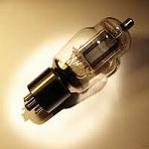
Here are the 1st pictures of TK-30A, serial #101 making TV pictures for the first time since the end of 1966! These were taken in my office today and I haven't retouched anything. What you see is what I saw. (The slightly greenish cast is from the florescent lamps in the workspace.) The turret has on it 2 - 135mm lenses and 1 - 90mm. The black hole is actually black masking tape so I can cap the tube in that I don't have a legit cap. I think I've gotten the alignment fairly close and the results are starting to look pretty sharp. The camera was owned by CBS-NY and had the usual Stanton-decreed, "Get those RCA insignia and so forth off my cameras and paint 'em all grey!" Fact was that when I got the cameras they were painted a sort of bilious green which I had to strip off of everything and repaint. Same was true of the CCU and PS. The pictures are from my office windows looking across the street at a new condominium being built there. The reason for the 8 inch modern monitor on the top of the CCU is that the CCU CRT has pretty severe linearity problems that I have yet to figure out. I've got to poke into this next week. Notice the digital meter to the extreme left of the CCU in picture #5. This gives me instant numbers for the AC voltage and current. Was handy for starting this up for the first time and knowing that it wasn't about to blowup. Helps build confidence. (Notice this gear is pulling about 8.5 Amps @ 116 vac. Less than I thought it would be!) As far as the number of components replaced: I replaced all of the caps with the exception of a few micas. Overall this was a rather expensive project given that the .05 mfd/ 7kv caps cost about $80 each and the oil 0.5 mfd/1500v was $148.00. I've replaced very few resistors except the bleeder chain in the viewfinder which had gone skyward with age. Surprisingly, practically every resistor in this chain is 5% or better and have held their values remarkably well. I've ditched a great number of the electrolytic cans as part of the recap to try to improve the airflow throughout the camera. Also, all of the HV wire in the camera had to be replaced because the insulation had rotted. I used the super flexible Alpha wire that John Folsom uses on his CT-100 vertical transformers, but had to buy 100 foot spool at $2.00 a foot! As far as the number of components: I replaced all of the caps with the exception of a few micas. This was a rather expensive proposition given that the .05 mfd/ 7kv caps cost about $80 each and the oil 0.5 mfd/1500v was $148.00. I've replaced very few resistors except the bleeder chain in the viewfinder which had gone skyward with age. Surprisingly, practically every resistor in this chain is 5% or better and have held their values remarkably well. I've ditched a great number of the electrolytic cans as part of the recap to try to improve the airflow throughout the camera. Also, all of the HV wire in the camera had to be replaced because the insulation had rotted. I used the super flexible Alpha wire that John Folsom uses on his CT-100 vertical transformers, but had to buy 100 foot spool at $2.00 a foot! Well, that's all the news for now. More to come! 
|
|
#2
07-25-2014, 10:36 AM
|
||||
|
||||
|
Great!
CBS dark gray and CBS light gray. Curiosity: Do you have test pattern shot? Can you get a shot off the 8 inch monitor with the room darkened? How long does it take to get it up and reasonably working from a cold start, or haven't you made a definitive trial?
|
|
#3
07-26-2014, 04:38 AM
|
||||
|
||||
|
This is a terrific post. I have a TK30 chain I am hoping to restore and it is great to see one working.
I'd like to know where you got the 5820 image orthicon tube and how many you had to try to get an image. How long does it take to "warm up" to get the picture? Are you using the original sync generator or are you getting the pulses from a newer source? Can you feed the camera chain ouput to a larger external monitor? Many thanks for posting this!
|
|
#4
07-26-2014, 04:12 PM
|
|||
|
|||
|
Thanks for the questions. Here are the answers:
Yes I do have a standard RETMA test pattern which I have used for setting the initial size and linearity of the camera, but I had to work fast as this tube burns-in rather rapidly and then I have to shoot something like a white wall or similar to get ride of the burn. So, I haven't taken the time to shoot a still photo of what it looks like now. Same goes for taking a shot off the 8 inch monitor. I'll get to these requests a little further down the road. The usual warmup time for an IO is about 1/2 hour, but the longer the better for oldies like this one. I've got about 8 IOs but I haven't gone through to rank them yet. I just pull this one out of the box at random and stuffed it into the camera; did a moderate alignment. I was just as surprised as the next guy to find that it worked as well as it did, burn-ins aside. I am not using the original TG-1 sync generator as this is a monstrous 2-case affair (which I've worked with in the past) which is just too much to handle in this day and age. I bought a Shibasoku generator off Ebay for about $25.00 which has all the necessary outputs to run the camera and weighs about 5-10 lbs versus 200 lbs for the TG-1. A TG-2 (about 60 lbs.) would do the trick, but even that is more weight than I care to lug around. Moreover the Shibasoku is an NTSC generator which makes it possible to insert burst so I can record it on any of the analog or digital recorders we have, from VHS to DCT and all in between. I suspect I'll probably use our VPR-5 (1", Type C analog,) as it's relatively light and easy to move around get quality results. And yes, the output can be fed into most common amateur and professional monitors which have a BNC or UHF (broadcast type, not RF) connector. More questions are welcome.
|
|
#6
07-26-2014, 06:10 PM
|
||||
|
||||
|
Quote:
What am I missing here? I thought that only the 29 point "something" frame rate and the corresponding horizontal rate was all that was needed for B&W. The last station where I worked (in 1965, a locally owned small-town microwave repeater in Kansas with a staff of 12 and in-house produced programs), had to run 30 fps on the B&W film chain due to the older projectors. We had two studio cameras, both GE videcons, one was color and the older one was B&W. The B&W studio camera ran at the color frequency with the burst being added to prevent sync and color roll on switching. All switching between our parent station (KTVH for CBS) or our studio cameras to the film chain had to be done in black as both rolled. This TV station is still on the air (although under new call letters), but now it is 100% remotely controlled. Unless something breaks, no humans are in the building. James
|
|
#7
07-26-2014, 09:16 PM
|
|||
|
|||
|
I think that the simplest way to explain this is to say that most professional analog recorders and certainly all digital recorders expect to see burst in the composite NTSC video signal they record. Equipment from the era of the TK-30A generally did not produce a composite signal, i.e., one that was made up of video and sync. The camera is fed with horizontal and vertical drive signals and, as you mentioned, sync was added later in the switcher. It is true that you can produce a composite signal from a TK-30A by applying composite sync to the appropriate input on the CCU, but to do a full color signal that more modern recorders would require, burst is also needed to lock the color circuits. Thus, by applying color sync, rather than "sync" alone, a composite color signal is produced even though it only carries black and white information. The obvious choice for this color sync would be "Black Burst" or NTSC composite black video.
|
|
#9
07-27-2014, 12:48 AM
|
||||
|
||||
|
Ralph, help me here. Were the TG-1/2 generators really part of the switcher suitcase that was available or was a TG needed for each camera? TS-5 I think for the switcher. And a spectacular restoration with your effort to get it going.
__________________
“Once you eliminate the impossible...whatever remains, no matter how improbable, must be the truth." Sherlock Holmes. Last edited by Dave A; 07-27-2014 at 01:22 AM. Reason: text
|
|
#10
07-27-2014, 08:12 AM
|
|||
|
|||
|
The TG-1 was a two suitcase affair and each part weighed approximately 80 lbs. The TG-2 was a single piece weighing about 60lbs. Only one generator was needed for a standalone camera or a group of cameras. If there were more than one camera in a given location, the drive and sync signals were looped from CCU to CCU and then terminated at the last CCU in the group.
The sync generator was not a physical part of the switcher. The switcher was a standalone unit of its own. In addition to switching, it provided the intercom functions need for everyone to communicate with each other and also tally light functions for directing the on-camera talent to know which camera was on the air at any given moment. I hope the above answers your questions. Any more?
|
| Audiokarma |
|
#11
07-27-2014, 09:04 PM
|
||||
|
||||
|
Thanks for the answers, and kudos again! Great job!
|
|
#12
07-28-2014, 02:53 PM
|
||||
|
||||
|
Hello Ralph, may I say you have made a great job of your restoration of the TK30, I have done several cameras and the time and effort that has to be put in is significant. I am currently working on a Marconi MkIII camera, I have had it working a few years ago, but like all these things time works it's ways and now it needs fixing again. Definitely not "plug & Play".
|
|
#13
07-30-2014, 04:00 PM
|
|||
|
|||
|
This will probably by my last submission to this thread unless someone comes up with more questions. But, here are answers and comment to questions I didn't answer previously:
I finally solved the linearity issue of the picture monitor on the CCU. It turned out to be some cut wires coming from the Hor. Lin. pot on the CCU. While I fixed that I also upgraded some of the micas in the Horizontal drive circuits of the CCU. The attached photo shows a closeup of the CCU CRT display as it looks now after the circuit correction and parts update. This was taken with the 135mm lens. The camera now has a very good IO in it. It turns out that 3 of the 8 IOs I had were from good to passable. I decided not to play around and use the good one. It produces a remarkably gradient-free picture with almost no burn-in. Fact is, it behaves like it's a brand-new tube and I was very surprised how well it worked! This is the one that was used to take the picture discussed above. The dolly is a Manfrotto from Italy. It's very light-weight yet strong enough to take the weight of the tripod, head and camera. The tripod is a Ronford-Baker from the UK and is about half the weight of the original Houston-Fearless that came from RCA. The head is a Houston-Fearless cradle head which works perfectly with this camera. I tried to use a flat-screen monitor to do the geometry setup on the camera but for the most part it would not cooperate because it wanted color burst in the video coming from the camera. When I switched from sync to black burst I would get occasional pictures on it, probably because the black burst was not at a high enough voltage to permanently turn on the picture. It was on enough so I could tell that the camera geometry was good, so I went back to the CCU crt. There have been questions from others how this equipment linked together with other parts of the RCA field equipment. I have attached a diagram of what each piece was and how they cabled together. I hope it is self explanatory. Have fun!
|
|
#14
07-30-2014, 06:48 PM
|
||||
|
||||
|
Ralph, how did your camera escape the white/black stripes painted on the VF sides for quick adjustment by the camera operators at CBS in the studio? As yours is a field camera, I may have answered my own question. Not done in the field.
And do you know the history of this camera and it's use?
__________________
“Once you eliminate the impossible...whatever remains, no matter how improbable, must be the truth." Sherlock Holmes.
|
 |
|
|








 Linear Mode

