
|
|
|
#16
 08-04-2024, 04:33 PM
|
||||
|
||||
|
July 30, 2024 Day 86
From Mike: Approx 7-29-24. I jigged the chassis to my 21FBP22 today, connected to a variac for first power up. When I got to full voltage, nothing was alive in the power supply. The D.C. voltages should be 385v,,,, 275v… and 140v. (roughly). All filaments were lit to normal brightness except for the 5U4 Recifier tubes, which were both blown. NO continuity through the filaments. This usually means that they died from an overload somewhere in the power supplies. I checked for shorts to ground, but nothing obvious. I then checked the fuse in the 385 volt line only to find that it was OK. BUT, somebody thought that it was an OK thing to install a 3.5 amp fuse into a place where it there should be a 2 amp fuse. Some technicians seem to think that it is an intelligent thing to do that. Upon replacing the two 5U4 tubes from my “good used” pile, and replacing the fuse with the proper value, I tried again only this time I monitored the D.C. amps inline with the fuse upon power up. It got to just under 2 amps when the fuse blew. The D.C. 385 volt supply never got over 50 volts with the variac at about 75% which would be around 80 VAC line volts. Still no obvious shorts using an ohm meter, which means that the short is only there with voltage applied. It is time to start changing all the electrolytic capacitors in all sections of the power supply. There are 4 “cans” on the chassis, and all of them are in the front where the crt insulator boot can interfere with the 2 in the front, if the cans are too tall. I learned this one the hard way a number of years ago when I restored my set. The best way to fix this problem for maximum reliability is to re-locate the caps with individual units under the chassis, and leave the cans in place for cosmetic purposes. Fortunately, there is a lot of room to work with under the chassis to accomplish this task. I cut out the studs on the cans one at a time for further clues with the ohm meter. What I found was that several of them were leaking voltages from section to section, rather than the normal failure mode of stud to ground. This did offer some explanation to the overcurrent condition with voltage applied. I spent a lot of time over the next few days mounting tie points for the new capacitors. Pictures 1 through 4 are the newly mounted electrolytic capacitors and some others that I replaced since I was already working there where the new ones were mounted. Upon the next power up, I had 325 volts of D.C. on the main output of the rectifiers. Some success! It will likely be much more like 385 later when I install NEW 5u4 rectifiers, but this voltage is fine for now during more troubleshooting. I now have weak audio but NO high voltage at all. A quick check of the Horizontal output and damper tube showed that they are probably OK. So, a quick check for a Horizontal Oscillator drive signal on the control grid of the output tube showed NO signal there. The oscillator tube checks ok but I tried a new one anyway. No change. I then checked for B+ at the osc. stage and that looked OK. Then I got lucky when I did a careful physical exam on the osc. board. I was prompted to do this since I noticed that some tech ahead of me mounted new capacitors on top of the board. That is not a good thing to do because it often times weakens the solder connection on the bottom side. That is when I found the capacitor that is across the oscillator coil had a cold solder joint. These oscillators work much better when the coil and capacitor are actually connected to the circuit. (sarcasm) . Picture 5 The red pen shows the point of cold solder joint. Picture 6 The previous techs “handy work” on top of the board. (sarcasm) Picture 7 Signal now present at the grid of the H. Output tube. But, still no high voltage even after I changed the 3A3 HV rectifier and the 6BK4 Regulator. Further troubleshooting continues. Cheers, Mike Authors note: Spoiler, we do have HV! Description to follow. https://visions4netjournal.com/wp-co.../E-caps-1.jpeg https://visions4netjournal.com/wp-co.../E-caps-2.jpeg https://visions4netjournal.com/wp-co.../E-caps-3.jpeg https://visions4netjournal.com/wp-co.../E-caps-4.jpeg https://visions4netjournal.com/wp-co...onnection.jpeg https://visions4netjournal.com/wp-co...ed-on-top.jpeg https://visions4netjournal.com/wp-co...ve-Signal.jpeg Visions4 Magazine https://visions4netjournal.com/
__________________

Last edited by etype2; 08-04-2024 at 04:46 PM. Reason: Word omission 
|
|
#17
08-04-2024, 10:52 PM
|
||||
|
||||
|
Hi to all,
Hi etype2, Very well documented restoration description by a master of the art. You're so lucky to have someone local able to do this. Just curious, what brand HV electrolytic capacitors does Mike use? (photo of a sample below) Best Regards jhalphen Paris/France
|
|
#18
08-05-2024, 12:26 PM
|
||||
|
||||
|
Quote:
All I know is he mentioned “high quality”.
__________________
|
|
#21
08-08-2024, 12:52 AM
|
||||
|
||||
|
August 7, 2024 Day 94
OK, I really do have High Voltage! My H.V. meter that has been very reliable for over 40 years lied to me! As I moved the schematic to a different part of the bench, I noticed the hair on my arm standing up when close to the CRT face. I swapped out the H.V. probe and it measured 16 KV. So, that is not enough, but good for now!! Pix 1 First image on this set for likely many years shows no sync, or maybe AGC issues. Hard to say. But I am going after the Horizontal Osc. board next. Pix 2 Parts removed. I replaced every part on this board except for the coil, which is obviously OK. All caps are new. Some resistors looked tired so they got replaced good or bad. Pix 3 Rebuilt Horizontal Osc. board. Pix 4. First good image with color. I still suspect maybe there is an AGC intermittent, but this is a milestone in the restoration process since it tells me a lot about the rest of the set. https://visions4netjournal.com/wp-co...3-no-sync.jpeg https://visions4netjournal.com/wp-co...sc.-board.jpeg https://visions4netjournal.com/wp-co...Rebuilt-2.jpeg https://visions4netjournal.com/wp-co...ood-image.jpeg There is still a lot of work to be done. I installed 2 brand new 5U4 tubes and the power supply voltages are now what they should be. I have tested all of the tubes and found several weak ones and they have been replaced. There are a number of controls that have issues and I am not sure if cleaning them will help. Most of them have to do with convergence. I may be facing some rebuilding of controls like I did with the volume/brightness/switch unit. Time will tell. Next, I plan on going after the Sync/AGC/Sound I.F. section. Even though the High Voltage is low, I am not too concerned with that for now. It should be 22KV. Onward, Mike
__________________
|
|
#22
08-08-2024, 02:18 AM
|
||||
|
||||
|
One thing to be aware of on these CTC-5s is that fixed bias HV regulation wasn't a great idea...On both of my CTC-5s I added a HV regulation control pot. It's pretty straightforward if you compare the CTC-7 and CTC-5 HV reg circuit schematics. The CTC-7 deletes one resistor and replaces it with a pot and a fixed resistor IIRC. The ability to adjust HV regulation helps with HV level in these sets.
__________________
Tom C. Zenith: The quality stays in EVEN after the name falls off! What I want. --> http://www.videokarma.org/showpost.p...62&postcount=4
|
|
#23
08-08-2024, 12:37 PM
|
||||
|
||||
|
Quote:
__________________
|
|
#24
08-13-2024, 09:44 PM
|
||||
|
||||
|
There have been a number of discussions in this forum on the CTC5 and it's inability to muster enough high voltage. I found mine barely able to squeek the 21kV. I would manage to make the 21kV when there was no beam current (black screen). But soon as the brightness would go up, the HV would dip a bit..
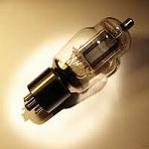
I didn't bother with the HV pot modification as the 6BK4 would start to draw current when the HV reached close enough to 21kV. What I did do was to ensure I had fresh good horizontal output and oscillator tubes and ensure there was sufficient horizontal drive to the output tube grid. I also substituted (and this was crucial) a solid state 3A3 rectifier for the original tube 3A3. The solid state version is a direct plug in replacement and changing it eliminated the HV sag with increased brightness. The 6BK4 now is doing its job properly as a shunt regulator.
|
|
#25
08-14-2024, 01:26 AM
|
||||
|
||||
|
Quote:
__________________
|
| Audiokarma |
|
#26
08-15-2024, 06:45 PM
|
||||
|
||||
|
Quote:
Those solid state 3A3s are my go to on sets where all parts check good or are new and I can't get the horizontal output cathode current low enough to be happy. They can help out with HV, but when the only way a set will top 18KV is with the regulator unplugged the pot becomes the necessary option.
__________________
Tom C. Zenith: The quality stays in EVEN after the name falls off! What I want. --> http://www.videokarma.org/showpost.p...62&postcount=4
|
|
#27
08-16-2024, 03:36 PM
|
|||
|
|||
|
It's been a while since I messed with my CTC5, but I remember getting about 23-25 KV with a dark screen, and about 19-20 KV before the HV would fall off a cliff and go low enough to lose focus and brightness. This was with stock circuitry and using tube focus and HV rectifiers. Might as well remove the 6BK4 since all it seems to do is set an upper HV limit with zero beam current. I haven't tried solid state diodes myself yet.
__________________
Erich Loepke
|
|
#28
08-16-2024, 05:28 PM
|
||||
|
||||
|
If you have such a large variation of HV in a regulator type set, something needs to be fixed. Working properly, the HV should be constant with varying brightness until you turn the brightness (beam current) excessively high, the regulator stops drawing any current, the HV starts dropping below the regulated value, and the picture goes out of focus and the width and height start increasing.
|
|
#29
08-16-2024, 11:15 PM
|
||||
|
||||
|
The CTC5 high voltage is supposed to be 21 kV. The shunt regulator is supposed to be holding the voltage at 21kV so if it is going above 21kV, something is amiss with the regulator circuit.
On the other hand if it is stuck at 18kV and you are sure of your meter calibration, again something appears to have drifted in the regulator circuit. I'd disconnect the 6BK4 plate and the measure the high voltage. If it reaches about 24kV with a brightness turned right down, that would be correct.
|
|
#30
08-17-2024, 08:15 PM
|
|||
|
|||
|
My 5, although basically working, could probably use a wholesale replacement of the carbon resistors, since I've already had so many of them that were either off value when I started, or have gone bad over time and caused new problems. My HV probe is a Fluke, and the kind used with an external DMM, and seems to be accurate. The big issue is how the HV just drops off suddenly if the brightness control is advanced too far, and, according to others here on this board, is a normal characteristic of the CTC5. In any case, IMO, the 5 really isn't a good "daily driver" because of the weak HV supply and the fact it just isn't very bright with the original AXP tube, not to mention convergence drift with the DC static adjustments instead of the magnets everything else used.
__________________
Erich Loepke
|
| Audiokarma |
 |
|
|








 Linear Mode

