
|
|
|
#16
 10-05-2006, 12:34 AM
|
||||
|
||||
|
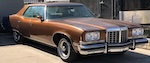
It's good to see that this set is being well preserved. The CRT looks strong even with the color not working. I remember thinking "oh chit!" too when I first saw the ad for it, because it said something about gutting it and putting a new set in (which probably wouldn't even look as good, especially given that new black matrix tube - I don't know why people always think the color is bad on older color sets, whenever I tell people I have old color sets they always tell me something about how the picture used to be all red or green... did people not know how to adjust the tint control in the past? I've been thinking of carrying around a picture of my ctc-15 working just for this reason.) and I was still up in San Jose and had no way to get back here with the brakes still out on my Buick.

|
|
#17
10-05-2006, 01:06 PM
|
||||
|
||||
|
Quote:
TV sets marketed in areas such as Youngstown, Ohio, Fort Wayne, Indiana, etc. which only have UHF stations would also have had factory-installed UHF tuners. In addition, all Zenith TVs manufactured until the all-channel law went into effect (including, of course, all VHF only sets) were designed for easy conversion to UHF reception by means of channel strips which could be installed in place of VHF strips for "vacant" channels. Up to five UHF strips could be installed, for example, in a 1950s-vintage Zenith TV located in New York or Los Angeles, which each have seven active broadcast stations (the UHF strips would be installed in place of the channel strips for VHF channels 3, 6, 8, 10 and 12). Sets located in other cities with fewer VHF stations, of course, could have as many as nine UHF strips, assuming a standard metropolitan area that had three VHF stations. Practically speaking, however, most of these sets would only be equipped with one or two UHF strips, since most cities didn't have more than one or two UHF stations, if that many (many cities went years before getting UHF, and even today there are certain areas, mainly out West, that still have only VHF service; some of these areas don't get all three major networks, or the local stations are affiliates of two or more (!) commercial networks, as was often done in the 1950s). Cleveland, for example, did not get its first UHF station (a PBS, then called NET, affiliate on channel 25) until 1965; the city's first commercial UHF station went on the air in 1968 on channel 43 and is now the area's MyTV affiliate. UHF television channels 70 through 83 were reallocated to land mobile radio services in 1970 (didn't realize that included analog cellular--in fact, I didn't know there was such a thing until now; car telephones, yes, but they weren't called "cellular" in those days, and they were anything but portable, with the main unit located in the trunk and the control head on the dashboard). All TVs made in the last ten years or so (and all recent-vintage analog sets, of course) are designed with UHF tuners that stop at channel 69. TVs with ATSC (digital) tuners are designed to tune only from channel 2 to channel 49--just 47 channels. Counting UHF channels only, they just tune 35 stations. BTW, I'll never forget the day channel 43 went on the air in Cleveland. I was in my basement working on a small radio, with another radio tuned to a local station, when a commercial came on: "DROP EVERYTHING! . . . CHANNEL 43 IS ON THE AIR!!!" I ran upstairs, turned on the living room TV to channel 43, and . . . well, the announcement was half right, anyhow. Channel 43 was on the air, all right--with a test pattern!
__________________
Jeff, WB8NHV Collecting, restoring and enjoying vintage Zenith radios since 2002 Zenith. Gone, but not forgotten.
|
|
#18
10-05-2006, 11:14 PM
|
|||
|
|||
|
If they really are selling TV's that won't tune in digital stations above 49 it could be the reason no body is using over the air digital signal. In the LA Market we have a lot of digital above 49. I know the plan is for them to move but that will be after analog is turned off. Sorry I don't have the list with me but I do have it at work. I know this to be a fack, I entered the channels into the 8VSB receivers myself to put the HD signals into our equipment at the headend.
|
 |
|
|




 Linear Mode

