
|
|
|
#1
 07-07-2012, 02:34 AM
|
||||
|
||||
|
Starting on a 56 Philco Transitone
I've been getting the itch to work on something again, kind of tired of 40's sets so I decided to get back to what I originally set out to collect, 1950's Portables.
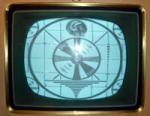
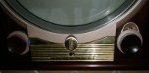
Here is a 1956 or 57 Philco Transitone in Brown and Cream color. It shares some of the Philco's worst traits with the Predicta, like the PC boards with no access to the Foil side, oh and that Foil, it lifts right up if you breath on it wrong. I wasn't quite sure how the chassis came out of this set, on some portables (notably GE) the CRT stays in the cabinet and the chassis comes out the back, on this one the whole thing slides out the front as a unit, much more convenient that way! I thought this set had a Raster when I first got it but now I just get a very loud squeal from the speaker, a little bit of HV but no light on the screen. I recapped the Horizontal Osc board (only 3 caps) it was a pain because I could only pull the board out a little ways without disconnecting some wires, I got it done though but I don't know if it's working. The Flyback looks very good, shiny black and no cracks or drips. For the main board I am going to disconnect enough wires to turn it where I can work on it flat, this will make it much easier to de-solder parts and avoid damaging the Foil. The 14QP4 CRT (dated mid 56) is tired, it'll go well into the good range after a long warm up and maybe a little heater boost but the Cutoff and Life Test are terrible, fortunately I have a good 14QP4 out of a GE (despite the dire warning to ONLY replace it with a Philco tube!) to put in it. After replacing the three caps I sprayed out the controls and tuner then called it a day. More later. Last edited by Eric H; 07-07-2012 at 02:39 AM. 
|
|
#2
07-07-2012, 06:02 AM
|
||||
|
||||
|
Only portables I worked on have chassis's - no PCB.
Thought about doing one some day but probably ought to start with a relatively problem free one. Do you have a recommendation? Carl
__________________
CW 1950 Zenith Porthole - "Lincoln"
|
|
#4
07-07-2012, 10:09 PM
|
||||
|
||||
|
Once you recap it, you'll need to alter the IF alignment. These sets do not like cable or DVD copy protection. As for your CRT, let it cook as you recap the set. Despite what Philco says, you can use a GE tube.
__________________
The world's worst TV restoration site on the entire intranoot and damn proud of it. http://evilfurnaceman.tripod.com/tvsite
|
|
#5
07-07-2012, 11:26 PM
|
|||
|
|||
|
I just finished a 1958 RCA similar in size to this one. These ususally have a metal shield across the back of the PC board that is hard to remove, increasing the difficulty of working on them. However, some previous servicemen had removed the one on this set. It seems to work ok after restoration without it.
I learned a couple of things on this set. After restoration, the vertical would shrink in height as the set warmed up. I had replaced all the capacitors in the vertical sections except a couple that I thought were of the later film design. I thought that as they looked like brown versions of the Sprague type orange drop capacitors. I went ahead and replaced these and things improved drastically. I will not make that mistake again. I still had some shrinkage after warmup. I then replaced the NOS RCA 6AQ5 tube that I had in the vertical output socket(the correct tube for this set per the RCA service manual) with a NOS GE 6AQ5. This fixed the final shrinkage issue. I think the RCA 6AQ5 is ok for an audio output, but not quite strong enough for the vertical output use in this set. The metal case on this set gets quite warm in the tube area after playing for an hour or so. I am sure that is hard on the internal components. That may be why the more modern looking capacitors failed(or they may have been the old capacitor design in a more modern looking case). Per the above comment about cable, I have this TV on a DTV converter box. It works well. I suspect it would also not work well on cable as sets of this era have poor selectivity, especially the cheaper ones.
|
| Audiokarma |
|
#6
07-08-2012, 02:46 AM
|
||||
|
||||
|
None of these little metal portables are exactly easy to work on in my experience, I am familiar with the metal shields on the RCA and they are a beech to remove and replace.
This Philco is actually not too bad, I've pretty much replaced all the tubular Caps, all Black Beauties or Bumblebees and only two paper type. The quality of the PC boards however is awful, there is just no way to remove a part without the foil coming unbonded from the board, I've been careful and not torn any but it makes the part somewhat wobbly after it's installed. I squirted some insulating Epoxy Paint over my work to try and strengthen the foil a bit.
|
|
#7
07-08-2012, 02:53 AM
|
||||
|
||||
|
Progress report.
After replacing all the paper caps the set still doesn't work much better than it did before. I get a weak raster but I also get a high pitched squealing noise through the speaker, it seems to be the Horizontal Oscillations getting into the audio, the volume control has no effect. I also don't seem to be able to get the Horizontal on frequency, though it's hard to tell with all the noise, however if I go one way it starts squealing and the HV quits, go the other way and it fades away. The 7AU7 tests so-so on one section but I doubt it would cause a problem, I haven't tested any other tubes except the Damper and Horiz Output (oddball 25DN6?) I tried jumping all the Electrolytics to no effect, I couldn't jump them all at once however and that doesn't eliminate the possibility of a short between sections. I also found I don't have or at least can't find the Sams for this set so I'm working blind here. Would anyone have a copy of a Sams 348-10 they could scan for me? Just the schematic part would be OK for the time being, I could use all of it eventually though. Not positive about that Sams number either, the model number on this set is blank but a 2004F is the most likely suspect (the F suffix is most likely just the color Fawn?) I appreciate the help! Last edited by Eric H; 07-08-2012 at 02:56 AM.
|
|
#8
07-08-2012, 12:26 PM
|
|||
|
|||
|
Eric:
I have the Philco service literature. That is better than Sams. If that will help, send me a PM and I will get it done by Monday PM. The "F" stands for flame. That is an off red, more like salmon. It may not be the original back. The chassis number is 7E10. Add fifty for the year, i.e. 1957. Try shorting the horizontal coil with a jumper and grounding pin 1 of the 30-6016 RC network. It should run somewhere close to frequency. If not, there are 4 parts that have the most effect: 7AU7, 430uuf silver mica, 47uuf silver mica, the 15K plate resistor and the 130K timing resistor. If it does run close to frequency and removing the ground sets it off, then the 34-8037 dual diode is most likely. Let me know if you want the schematic. Don
|
|
#9
07-08-2012, 07:13 PM
|
||||
|
||||
|
I pulled the main Filter Cap so I can restuff it, when I opened it up it was pretty obvious it was not doing it's job. I haven't seen many late 50's sets with a Cap this dried out!
I didn't have the exact values to install in the can so that'll have to wait until tomorrow when I can get some, Radio Shack didn't stock anything over 50 volts.  I did manage to kludge in some close enough Caps to see if it would work, and it does! It still has very unstable sync but the squealing is gone and it has a nice raster and after I turned on the BT Modulator it had a picture too. The Modulator is in the same room a few feet away so I didn't even have to hook up an antenna to the set. There's still one more Can, not sure what it does but it's only one section, I'll do that one tomorrow also and see what happens. Last edited by Eric H; 07-08-2012 at 07:19 PM.
|
|
#10
07-08-2012, 11:40 PM
|
||||
|
||||
|
Philco 14"
Please consider replacing the selenium rectifier with plain silicon diodes. This would be the orange device with the big fins. They have a notorious rep for failing suddenly. Not AS much of a problem in this set since it is series string and there is no pwr xfmr to blow up.
|
| Audiokarma |
|
#11
07-10-2012, 11:25 PM
|
||||
|
||||
|
Quote:
Tonight I replaced the last Can Filter, all the paper caps are done too. I also replaced one marginal resistor on the main board. When I tried to fire it up tonight I had no picture, this was due to having no high voltage though I could hear the oscillator running. I thought the tube bases might still be wet from washing them the other day so I retested the output and damper, the output was fine but the 12AX4 was absolutely dead, zero emissions and not due to water in the base which would have caused a short reading. Oh well, I scrounged up another one and back in business, however now the Horizontal wouldn't go far enough to bring the picture in, it would almost make it then the oscillator would start screeching and die. I found this was due to a drifted 150k resistor on the Horiz board, it was up around 550k. I jumped a 470k across it and now the horizontal will flop both directions, however I still have no Sync, vertical or horizontal. I guess I will have to remove the horizontal board and go over it carefully, check all the resistors and maybe build some new integrated parts.
|
|
#12
07-11-2012, 11:12 AM
|
|||
|
|||
|
Check the 68K plate resistor on the 6AW8 sync sep.
|
|
#13
07-11-2012, 02:33 PM
|
||||
|
||||
|
Quote:
The 6AW8 tests good but if I can find another I might try subbing it.
|
|
#14
07-11-2012, 11:21 PM
|
||||
|
||||
|
Alrighty then, I removed enough wires that I could pull the Horizontal board back enough to have full access to the Foil side.
Earlier when I had installed the Horiz AFC diodes I only had a narrow slot to work through, I thought I had soldered the diode in OK but it turns out I missed all three pins entirely, there wan nothing attaching the diode to the board but friction! I soldered it in good this time with the big Iron, I also replaced a couple resistors, turned out the one I thought was high wasn't really but I replaced it anyway since I had it out. Put it back together and now I have a rock solid picture, vertical and horizontal, and the horiz will flop both ways. I didn't have any sound though, I had pretty good sound last night but it seemed a bit touchy, tonight just buzz and an occasional faint wisp of sound. All I did was poke around and gently adjust the if cans, a bit one way and a bit the other and back where it was. After a while the sound just started drifting back, low at first and then it came on strong and the buzz subsided, I have no idea why. Maybe a tube is shorted and it comes and goes, I'll have to check them again.
|
|
#15
07-12-2012, 04:52 PM
|
|||
|
|||
|
Eric:
Sound take off coil, discriminator transformer and dirty/broken tube socket pins are the most frequent offenders. Sometimes you can squeeze the pins back in with a sharp, pointy tool like a dentist pick. The tubes plug in through the bottom of the socket so replacement sockets must be exact. The sockets connections would get hairline breaks between the tube contact and the PC board pin. Impossible to see, but an ohm meter check will reveal a bad one. Don
|
| Audiokarma |
 |
|
|






 Linear Mode

