
|
|
|
#1
 03-08-2020, 06:09 PM
|
||||
|
||||
|
Voltage on capacitors
Is there any possible way of determining the voltage capability of a capacitor when there is no voltage marking. I have 2 capacitors that are about as round as a quarter and about 3 inches long and they came from a strobe light circuit and the sticker on them indicate that 375 volts were tested on them and passed but that's it , but no definitive voltage amount it is rated for.
 so with these old sets that have 450 volt caps, do they really reach 450 volts or is this just the 20-30% built in, AKA , overkill like they did back then. so with these old sets that have 450 volt caps, do they really reach 450 volts or is this just the 20-30% built in, AKA , overkill like they did back then.
Last edited by timmy; 03-08-2020 at 06:32 PM. 
|
|
#2
03-08-2020, 06:56 PM
|
||||
|
||||
|
Quote:
If your cap was tested for 375, my guess is that it's close to it's limit, and maybe the strobe ran it at 350V. If there are any other markings on the caps, the voltage rating might be encoded therein. I see many film caps in switch mode supplies that don't have a printed voltage rating on them, but they may have a "2J" for instance, which is a 630V cap. 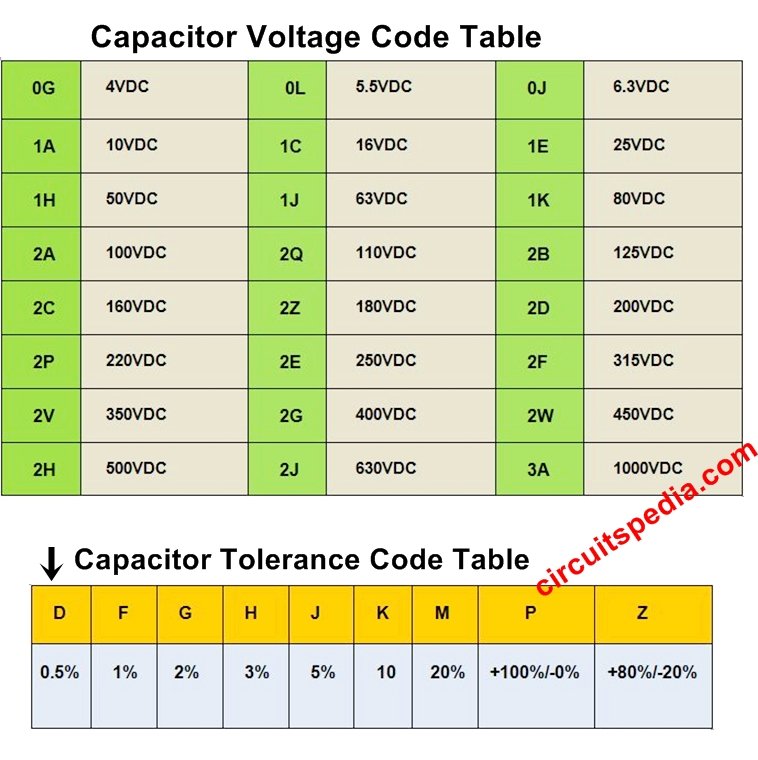 With regards to old TVs and their 450V caps, I find that a lot of tube TVs run voltage across these caps right at their limit, so there's not a lot of headroom. I don't know if I'd trust that 375V cap in a 450V application. John
|
|
#3
03-09-2020, 09:54 AM
|
||||
|
||||
|
I've seen some sets where in the ~11 secs it takes for the tubes to warm up the 450V caps get slammed with 500V then as the tubes start to load the rail it drops down to roughly 450V....It has made me ponder making 500V my new higher voltage bulk lytic ordering voltage.
__________________
Tom C. Zenith: The quality stays in EVEN after the name falls off! What I want. --> http://www.videokarma.org/showpost.p...62&postcount=4
|
|
#4
03-09-2020, 10:18 AM
|
||||
|
||||
|
Electrolytics behave differently to other types of capacitors. For paper, plastic, mica etc if there's any* leakage then the capacitor is dead. If you overvolt them and they leak then for all except X rated caps you have killed them. X rated caps are designed to withstand this by blowing away a bit of foil at the site of the leak. Do it too often and the capacity drops. Common problem with capacitative droppers.
Electrolytics have to leak a little in order to work. The dielectric layer is formed this way. An electrolytic that has been used at a fraction of its rated voltage for a long time will form a dielectric layer suited to that voltage. If you suddenly apply full rated voltage then you will get grossly excessive leakage until either the capacitor re-forms or dies. Hence the need to reform NOS electrolytics. Many electrolytics are quite tolerant of short term overvoltage, for example at switch-on before valves (tubes) have started to conduct. Some types have 2 ratings - continuous and short term or surge. *The meaning of "any" is different between ordinary radio/TV work and some precision instrumentation where ultra low, sub picoamp, leakage is needed.
|
 |
|
|






 Linear Mode

