
|
|
|
#1
 04-17-2021, 01:47 AM
|
|||
|
|||
|
DuMont model# RA-166
Hi, I have a DuMont 1953 tv which has been sitting in storage for at least 25 years. I finally got to it to see what could be done to bring it back to life.
I didn't turn it on before I did a recap but after the recap, it came to life. No smoke or anything bad, just great light and raster, full screen and excellent vertical and horizontal sync. Problem is that it is not getting any RF. All tubes test great and the sockets have been cleaned, just no RF. I know I can get it working and I am not giving up on it just yet but I thought maybe someone here might be able to give me a few tips on where to look. I haven't found any open resistors or cold solder joints. I could test for B+ but I just haven't had the time just yet to really dig into it so I thought I'd see what people here had thoughts first. I have the schematic and have been studying it for days but nothing is really jumping out at me so I thought I would ask here for some tips before I really dive in. Thanks for any help and support. 
|
|
#2
04-17-2021, 08:40 AM
|
||||
|
||||
|
What are you using for the source of the RF?
What test equipment do you have?
|
|
#3
04-17-2021, 02:54 PM
|
|||
|
|||
|
Right now I just have the tuner but I am not getting any snow and my VCR does nothing on any channel.
Let me know if you need me to post the schematic as I can't post it using my Ipad. I'll have to dig out my scanner but it can be easily had for free from the net. I just have a meter and a scope. No tv anilyzer or such stuff. I suppose I'll have to dig out my signal tracer buried somewhere out in my barn. Just hopefully thought someone might have had the same problem and be able to point to an area to focus on. I'll be looking at it later on tonight. Thanks for any help. Last edited by cademan; 04-17-2021 at 03:00 PM.
|
|
#4
04-18-2021, 04:36 AM
|
|||
|
|||
|
I'm a doofus!
I have RF. I have plenty of sound and audio amplification. I don't have IF. No snow or anything, just a blank white screen. I'm trying to focus my attention to the 1st, 2nd, 3rd, and 4th IF stages. Sorry for the confusion. 
|
|
#5
04-18-2021, 10:01 AM
|
||||
|
||||
|
If you have sound your IF is probably OK. I don't think this set has split sound, but I could be wrong.
I would look at the video amp/output stage.
|
| Audiokarma |
|
#6
04-18-2021, 10:19 AM
|
||||
|
||||
|
Quote:
|
|
#7
04-18-2021, 10:26 AM
|
||||
|
||||
|
The schematic I found at radiomuseum.org suggests that this thing has intercarrier sound, so the IF has to be working (and IIRC, the video detector). Thus, the issue would be after that. Does the sync try to lock? That might narrow it down a bit. Could be as easy as a dead tube. Also, if the capacitors haven't been replaced, that needs to be done before you burn out anything irreplaceable...
Meter and scope is pretty much what you need for most of the work on a B&W TV set... Last edited by nasadowsk; 04-18-2021 at 10:28 AM. Reason: Busy digging ouy my Bendix, so I'm doing 20 things at once...
|
|
#8
04-18-2021, 04:17 PM
|
|||
|
|||
|
Let me be more specific. The sound amplifier is working and a crackling (dirty volume control) gets louder or softer as you adjust the volume control.
It's got sync just no snow. The screen is nice and bright and you can see it flicker when you adjust the vertical and horizontal. It fills the whole screen and you don't even see any retrace lines. It has been recapped. Thank you all for replying so far. Last edited by cademan; 04-18-2021 at 04:21 PM.
|
|
#9
04-19-2021, 09:18 AM
|
||||
|
||||
|
Without some kind of video it would be hard to tell if you have sync. You do have sweeps and HV, and working audio amp. The video detector diode is a frequent problem, that would kill the sound also. Could be a mistake in re-capping of course.
A oscilloscope would be handy to find out if you have a signal at the video detector. You would need a scope that could display at least 50MHz to see the video IF. However if you had a demodulator (detector) probe you could see any video on it with only a 5MHz scope.
|
|
#10
04-19-2021, 09:46 AM
|
||||
|
||||
|
You could always try feeding in video right after the detector into the first amp, ( test point A mark on most SAMS), this is normally into a grid with almost 0v on it, I usually couple with a film cap for added saftey.
Even if the video may be too high/low that you are feeding in, you should get some kind of reaction.
__________________
=^-^= Yasashii yoru ni hitori utau uta. Asu wa kimi to utaou. Yume no tsubasa ni notte. いとおしい人のために
|
| Audiokarma |
|
#11
04-19-2021, 09:59 AM
|
||||
|
||||
|
You don't even need video to test the whole video chain from the video detector on.
An audio generator will do. You just hook it up through a .047 uF cap and play with the frequency for 60 Hz up. If the video works you will see a sine wave modulation in bars that change with frequency in the obvious way.
|
|
#12
04-19-2021, 03:57 PM
|
||||
|
||||
|
If you do a lot of TV work having a B&K 10xx series analyst is worth while...troubles like these can be localized fast with one as the analyst can generate video of both polarities and adjustible amplitude to check video stages by injection and RF and IF test signals (and any other signal you'd need to troubleshoot any other problem).
Direct video injection and audio injection into the video are both valid signal injection methods when you have limited equipment on hand.
__________________
Tom C. Zenith: The quality stays in EVEN after the name falls off! What I want. --> http://www.videokarma.org/showpost.p...62&postcount=4
|
|
#13
04-19-2021, 04:30 PM
|
|||
|
|||
|
yeah, I wished I had bought some of the tv equipment I could have had for cheap right out of high school but alas, I did other things with my life back then.
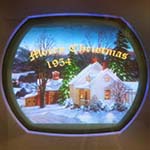
I double and triple checked my recap. I only replaced 6 electrolytics and 6 coupling caps. All the rest are original as they are the disc type. I have a few more that might need to be replaced but according to a sticker on the back panel, they were replaced by a shop back in 1995. Anyway, here's a couple of pics - one with it turned off and one with it turned on: Its hard to troubleshoot in the cabinet with the picture tube connected. I can easily remove the chassis but I believe that I would need to remove the 6BQ6 horizontal tube plus it needs the speaker w/transformer plugged in when testing and I have not yet removed it from the cabinet. With such a nice bright raster, I am not giving up just yet!  Anyone in WA state between Olympia and Portland that has one or could possibly help? Last edited by cademan; 04-19-2021 at 04:43 PM.
|
|
#14
04-19-2021, 05:16 PM
|
||||
|
||||
|
If the CRT is mounted to the cabinet you could put the cabinet next to your work bench build some extension cables to hook the chassis to the CRT. If that uses an octal yoke plug (or one based on some other tube socket) buy a dud tube and a new tube socket the same type as the yoke socket, get some wire and make an extension cable, get a CRT brightener that fits your CRT delete the transformer and wire the 2 connectors together with longer wires and you have a CRT socket extension cable, get a few feet of non-resistive spark plug cable (your local autoparts store should sell it by the foot) and the CRT HV connector off a junk set or NOS solid state flyback and make your HV extension cable (put the point where the original HV cable and extension meet in a glass jar to prevent arcing).
Aonther option is to get a telematic 8" monochrome test jig. All of the test equipment you could ever want is out there on ebay, at hamfests, and the like. Theres tons of analog TV test equipment out there and most of it has no market and thus is dirt cheap...Most of my vintage TV test equip I bought over the last 10 years and most of it was under $25 a pop.
__________________
Tom C. Zenith: The quality stays in EVEN after the name falls off! What I want. --> http://www.videokarma.org/showpost.p...62&postcount=4
|
|
#15
04-20-2021, 08:43 AM
|
||||
|
||||
|
Check the voltages on the CRT socket. That screen seems so bright I think it is flat out maximum bright. If no video signal is getting to the video output tube the screen would not be at maximum brightness but more a medium level.
Something might be at an extreme level coming from the video output section. You also have a scope so I would look for signals on the CRT socket.
|
| Audiokarma |
 |
|
|




 Linear Mode

